

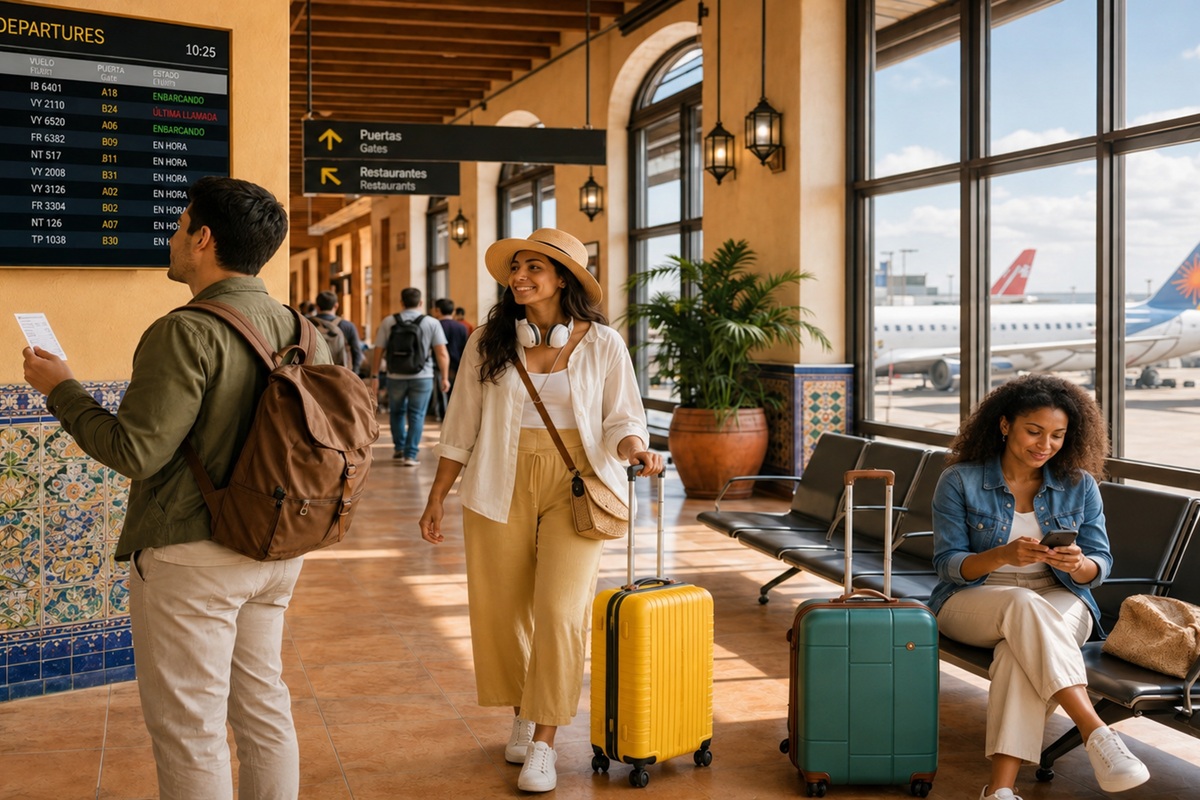
Picture this: you’re standing in a bustling airport in Madrid, Mexico City, or Buenos Aires, and everyone around you is speaking rapid Spanish. Your flight is boarding soon, but you can’t understand the announcements. Your luggage seems to have vanished, and you need help fast. Sound familiar?
Navigating airports in Spanish-speaking countries doesn’t have to be stressful. With the right phrases in your toolkit, you’ll move through terminals with confidence, handle unexpected situations, and maybe even impress a few locals along the way.
Essential Spanish Greetings and Polite Phrases
Before diving into airport-specific vocabulary, let’s cover the fundamental phrases that will serve as your foundation for any interaction:
- Hola – Hello
- Disculpe – Excuse me
- Buenos días – Good morning
- Buenas tardes – Good afternoon
- Buenas noches – Good evening
- ¿Qué hora es? – What time is it?
- Gracias – Thank you
- De nada – You’re welcome
- ¿Me puede ayudar? – Can you help me?
- Disculpe, tengo una pregunta – Excuse me, I have a question
These phrases will open doors to friendly interactions with airport staff and fellow travelers. Remember, a polite disculpe followed by your question shows respect for local customs and often results in more helpful responses.
Key Airport Vocabulary You Need to Know
Familiarizing yourself with basic airport terminology will help you understand signs, announcements, and directions:
- El aeropuerto – Airport
- El boleto/El billete – Ticket
- El pase de abordar – Boarding pass
- El pasaporte – Passport
- La maleta – Suitcase
- El equipaje de mano – Carry-on bag
- El equipaje facturado – Checked luggage
- La puerta – Gate
- La terminal – Terminal
- El mostrador de información – Information desk
These words appear on signs throughout Spanish-speaking airports, so recognizing them quickly will save you time and reduce stress during your travels.
Phrases for Flight Information and Boarding
Whether you’re dealing with delays, gate changes, or simply trying to confirm your departure time, these phrases will keep you informed:
- ¿Cuándo sale el vuelo? – When does the flight leave?
- ¿Cuándo llega el vuelo? – When does the flight arrive?
- ¿A qué hora llegamos? – What time do we arrive?
- Mi vuelo está retrasado – My flight is delayed
- ¿Cambiaron la puerta? – Did they change the gate?
- El avión está listo para abordar – The plane is ready to board
- ¿Con qué aerolínea vuela? – Which airline are you flying with?
- Aquí está mi boleto – Here’s my ticket
Flight delays are common worldwide, and knowing how to ask about your flight status in Spanish can help you stay informed and make alternative plans if necessary.
Navigating Airport Facilities and Services
Airports are complex environments with numerous facilities and services. These directional phrases will help you find what you need:
- ¿Dónde está la puerta de embarque? – Where is the boarding gate?
- ¿Dónde están los restaurantes? – Where are the restaurants?
- ¿Dónde está la aduana? – Where is customs?
- ¿Dónde está el baño? – Where is the restroom?
- ¿Dónde recojo mi pase de abordar? – Where can I pick up my boarding pass?
- ¿Dónde está la parada de taxis? – Where is the taxi stop?
- ¿Dónde está la estación de tren? – Where is the train station?
- ¿Puedo pagar con tarjeta? – Can I pay with a card?
Don’t forget that many Spanish-speaking countries have different payment preferences. Some places might not accept certain credit cards, so it’s always good to ask ¿Puedo pagar con tarjeta? before making a purchase.
Dealing with Lost or Delayed Baggage
Baggage issues are among the most stressful travel situations. These phrases will help you communicate effectively with airline staff:
- ¿Dónde está la recogida de equipaje? – Where is baggage claim?
- ¿Dónde puedo recoger mis maletas? – Where can I pick up my suitcases?
- Mis maletas están perdidas – My suitcases are lost
- Mi maleta no aparece – My suitcase doesn’t appear
- Necesito llenar un formulario – I need to fill out a form
- ¿Cuándo llegará mi equipaje? – When will my luggage arrive?
When dealing with lost luggage, stay calm and polite. Airport staff handle these situations regularly and are usually well-equipped to help you track down your belongings.
In-Flight Spanish for a Comfortable Journey
Once you’re on the plane, these phrases will help you communicate with flight attendants and fellow passengers:
- La azafata/El auxiliar de vuelo – Flight attendant
- Primera clase – First class
- Clase ejecutiva – Business class
- Clase turista – Economy class
- El asiento de ventanilla – Window seat
- El asiento de pasillo – Aisle seat
- ¿Me puede dar un vaso de agua? – Can you give me a glass of water?
- ¿Puedo cambiar de asiento? – May I change seats?
- ¿A qué hora aterrizamos? – What time do we land?
- Hay mucha turbulencia – There’s a lot of turbulence
Flight attendants in Spanish-speaking countries are typically multilingual, but showing effort to communicate in Spanish often results in warmer, more personalized service.
Cultural Tips for Airport Interactions
Understanding cultural nuances can significantly improve your airport experience. In many Spanish-speaking countries, personal interactions are valued highly. Taking a moment to greet someone properly before asking for help is considered polite and often leads to better assistance.
Additionally, patience is key. Service pace may differ from what you’re accustomed to, and showing frustration rarely helps. Instead, use phrases like ¿Tiene un momento? (Do you have a moment?) to politely request assistance.
Practice Makes Perfect
The key to using these phrases effectively is practice. Try rehearsing common scenarios before your trip. Practice asking for directions, ordering food, or explaining a problem with your luggage. The more comfortable you become with these phrases, the more confident you’ll feel when you need them most.
Consider writing down the most essential phrases on a small card or saving them in your phone for quick reference. Even if you’re nervous about pronunciation, most Spanish speakers will appreciate your effort and be patient with your attempts.
Your next adventure to a Spanish-speaking destination doesn’t have to be overwhelming. With these essential phrases in your travel toolkit, you’ll navigate airports with confidence, handle unexpected situations gracefully, and maybe even make some new friends along the way. ¡Buen viaje!