
Diwali is celebrated once a year, usually in October or November. The exact dates change each year because the festival follows the Hindu lunar calendar.
During this time, homes and streets across India and many communities around the world are illuminated with small lamps. Diwali is often called the Festival of Lights and is one of the most widely recognized celebrations associated with Indian culture.
For many people, Diwali is a time for family gatherings, prayers, food, gifts, and new beginnings. Light is an important symbol of the festival and is often associated with hope, knowledge, and the victory of good over evil.
Diwali has strong connections with Hindu traditions, but it is also observed in different ways by Jains, Sikhs, and other communities. Because customs vary by religion and region, there is no single way that everyone celebrates Diwali.
Still, the festival is commonly associated with a five-day period. Here is a simple look at what those days can represent.
Day 1: Dhanteras
The first day is known as Dhanteras.
For many families, this is a day of preparation. Homes may be cleaned and decorated, and some people purchase household items, gold, silver, or other goods considered auspicious.
The day is closely associated with prosperity and good fortune. In Hindu households, preparations may also be made to welcome Lakshmi, the goddess associated with wealth and prosperity.
Day 2: Naraka Chaturdashi
The second day is often called Naraka Chaturdashi, although its name and traditions differ across India.
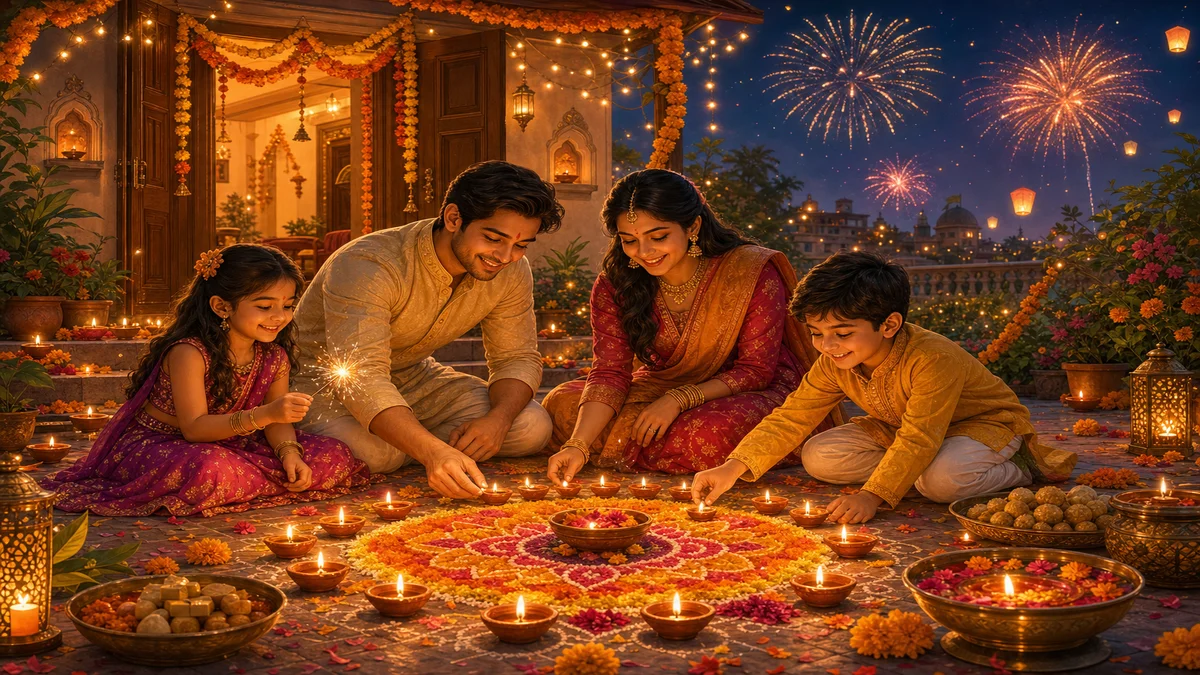
People may decorate their homes with rangoli, colorful patterns traditionally created near entrances using materials such as colored powder, rice, flowers, or sand.
Lamps may also be lit, and families continue preparing food and decorations for the main celebration.
In some regions, this day is known as Choti Diwali, or “Little Diwali.”
Day 3: The Main Diwali Celebration
For many Hindu families, the third day is the main day of Diwali.
After sunset, homes are illuminated with diyas, small oil lamps traditionally made from clay. Candles and electric lights are also common today.
Families may perform Lakshmi Puja, offering prayers to Lakshmi and asking for prosperity and well-being.
Food is another major part of the celebration. People prepare and exchange sweets such as laddoo, jalebi, and many regional specialties. Gifts and sweets are often shared with relatives, friends, neighbors, and coworkers.
Fireworks have also traditionally been part of Diwali celebrations in many places, although concerns about air pollution, noise, and safety have led some communities to reduce their use.
Day 4: Different Traditions Across India
The fourth day demonstrates just how diverse Diwali can be.
In some Hindu traditions, people celebrate Govardhan Puja, which is connected with the story of Krishna and Govardhan Hill.
In Gujarat and some other communities, this period is also associated with the beginning of a new year. Families may visit relatives, exchange greetings, and wish one another prosperity for the year ahead.
The customs of this day can therefore look very different depending on where a family comes from.
Day 5: Bhai Dooj
The final day is commonly known as Bhai Dooj and celebrates the relationship between brothers and sisters.
Traditionally, sisters may perform a small ceremony for their brothers and offer prayers for their health and well-being. Brothers may give gifts in return, and families often share a meal together.
Like many Diwali traditions, modern celebrations are flexible. What matters most is usually the opportunity to spend time with family and recognize important relationships.
Why Are Lights So Important During Diwali?
The most recognizable image of Diwali is probably the glowing diya.
The Sanskrit name often associated with Diwali, Deepavali, comes from words referring to a “row of lamps.” Lighting lamps has several religious and cultural interpretations, but the broader idea of light overcoming darkness appears throughout many Diwali traditions.
That is why homes, temples, shops, and streets can become dramatically brighter during the festival.
Diwali Is Not Celebrated the Same Way Everywhere
It is useful to think of Diwali not as one fixed set of customs, but as a festival with many regional and religious traditions.
A family in northern India may tell different stories about Diwali from a family in southern India. Hindu, Jain, and Sikh communities may also connect the festival period with different religious events.
Foods, prayers, decorations, and even the importance of particular days can vary.
That diversity is part of what makes Diwali such an interesting festival to learn about.
Final Thoughts
Diwali is often described as the Festival of Lights, but it is also a celebration of family, renewal, generosity, and hope.
From lighting diyas and creating rangoli to sharing sweets and visiting relatives, the festival brings together religious traditions and everyday family life.
For language learners, understanding celebrations like Diwali can also provide useful cultural context. Learning a language is not only about vocabulary and grammar — it is also about understanding the traditions, values, and experiences of the people who speak it.