Mastering Korean Numbers: A Complete Step-by-Step Guide
- Korean
- · Updated
- 2 min read
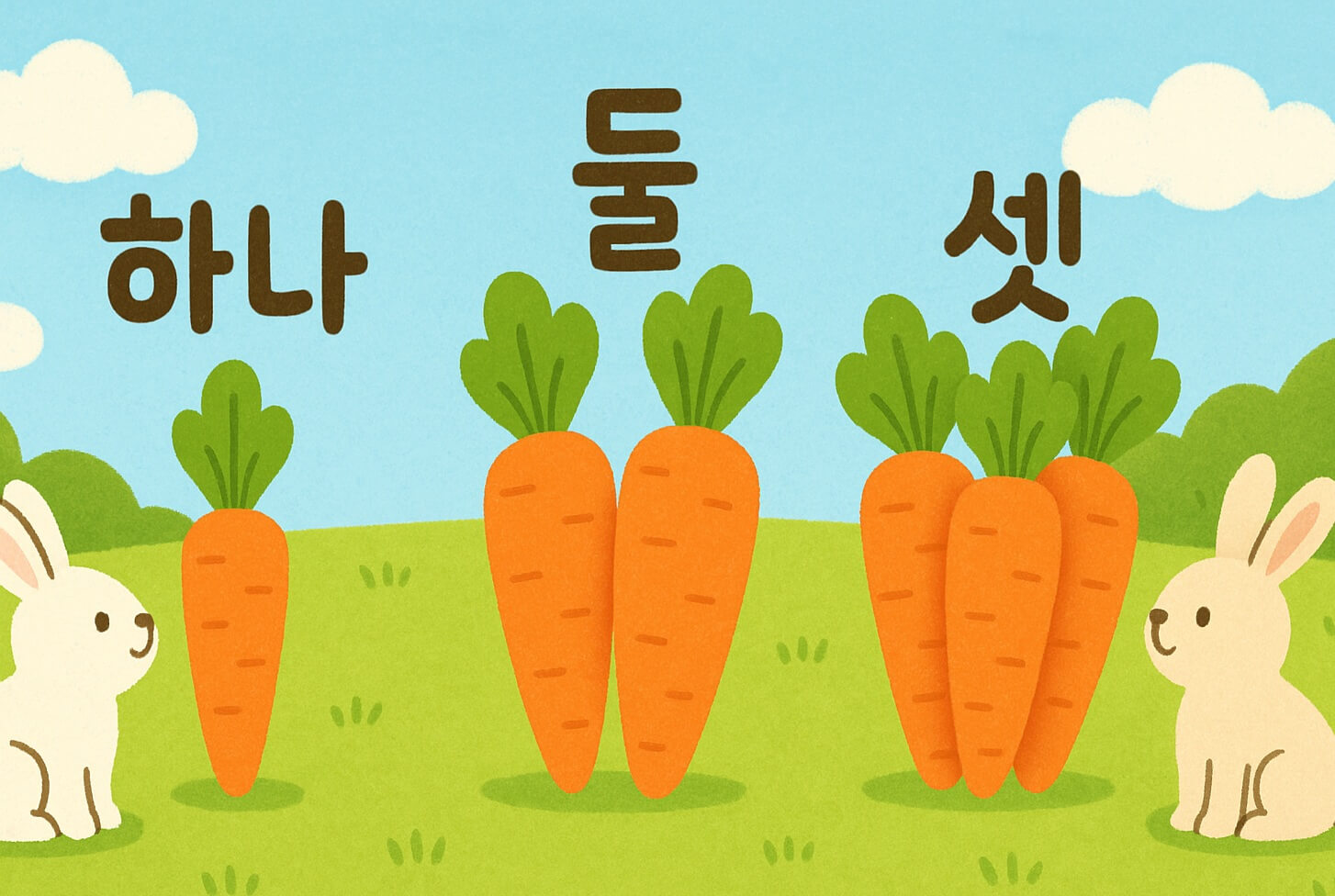
If you’ve started learning Korean, you’ve probably noticed something unusual about its numbers—there are two different systems for counting. Each has its own rules, exceptions, and situations where it’s used. At first, it might feel like a tricky puzzle, but once you spot the patterns, it becomes much easier.
This guide will take you step-by-step so you can count confidently in Korean.
1. The Two Korean Number Systems
Korean uses:
- Native Korean numbers – Used mainly to count objects, people, and age (in casual settings).
- Sino-Korean numbers – Derived from Chinese, used for dates, money, phone numbers, minutes, and other formal or specific contexts.
Think of it like having two measurement systems—you don’t mix them, but you need both for different purposes.
2. Native Korean Numbers (하나, 둘, 셋…)
These are used for counting objects, people, and hours when telling time.
| Number | Native Korean |
|---|---|
| 1 | 하나 (hana) |
| 2 | 둘 (dul) |
| 3 | 셋 (set) |
| 4 | 넷 (net) |
| 5 | 다섯 (daseot) |
| 6 | 여섯 (yeoseot) |
| 7 | 일곱 (ilgop) |
| 8 | 여덟 (yeodeol) |
| 9 | 아홉 (ahop) |
| 10 | 열 (yeol) |
Special note: When combined with counters (for objects, hours, or people), certain numbers change slightly:
- 하나 → 한
- 둘 → 두
- 셋 → 세
- 넷 → 네
- 스물 (20) → 스무
Examples:
- 한 사람 (one person)
- 세 시 (three o’clock)
3. Sino-Korean Numbers (일, 이, 삼…)
These are used for:
- Dates and months
- Money
- Phone numbers
- Minutes (in telling time)
- Larger numbers
| Number | Sino-Korean |
|---|---|
| 1 | 일 (il) |
| 2 | 이 (i) |
| 3 | 삼 (sam) |
| 4 | 사 (sa) |
| 5 | 오 (o) |
| 6 | 육 (yuk) |
| 7 | 칠 (chil) |
| 8 | 팔 (pal) |
| 9 | 구 (gu) |
| 10 | 십 (sip) |
After ten, numbers are formed the same way as in English:
- 11 = 십일 (sip-il)
- 25 = 이십오 (i-sip-o)
- 100 = 백 (baek)
- 1,000 = 천 (cheon)
- 10,000 = 만 (man)
4. When to Use Each System
| Situation | Number System |
|---|---|
| Age (casual) | Native Korean |
| Age (official/formal) | Sino-Korean |
| Counting objects | Native Korean |
| Counting people | Native Korean |
| Money | Sino-Korean |
| Dates | Sino-Korean |
| Phone numbers | Sino-Korean |
| Minutes | Sino-Korean |
| Hours | Native Korean |
5. Quick Practice Examples
-
I am 25 years old.
- Casual: 스물다섯 살이에요. (Native)
- Formal: 이십오 세입니다. (Sino-Korean)
-
It’s 3:15.
세 시 십오 분 (Native for hours, Sino for minutes)
-
Five books.
책 다섯 권 (Native)
6. Tips to Learn Faster
- Separate them in your head. Memorize native numbers up to 60 and Sino-Korean numbers up to the thousands.
- Practice in context. Use real-life phrases like 세 시 (three o’clock) or 오천 원 (5,000 won) in everyday situations.
- Use apps and flashcards for quick, consistent review.Bunpo also offers Korean courses, so you can learn the language alongside numbers and more.
Once you get used to switching between the two systems, counting in Korean will feel completely natural—like changing gears in your brain without even thinking about it.