
Imagine sitting in a cozy trattoria in Bologna, the aroma of slow-cooked sauce in the air, a plate of handmade pasta in front of you. Now imagine confidently ordering that dish in Italian—and understanding what’s on the menu.
That’s the beauty of learning a language through food.
In this guide, you’ll explore Bologna food while picking up practical, everyday Italian you can actually use. By the end, you’ll know key Italian food words, useful phrases, and how to sound more natural when dining in Italy.
Why Bologna Is Perfect for Food Lovers
Bologna, located in northern Italy, is often called la grassa (“the fat one”) because of its rich culinary traditions. It’s famous for hearty dishes, handmade pasta, and deep flavors.
For language learners, it’s also a perfect place to learn Italian vocabulary in a fun and memorable way—because food is something you can see, taste, and talk about instantly.
1. Tagliatelle al Ragù
What it is
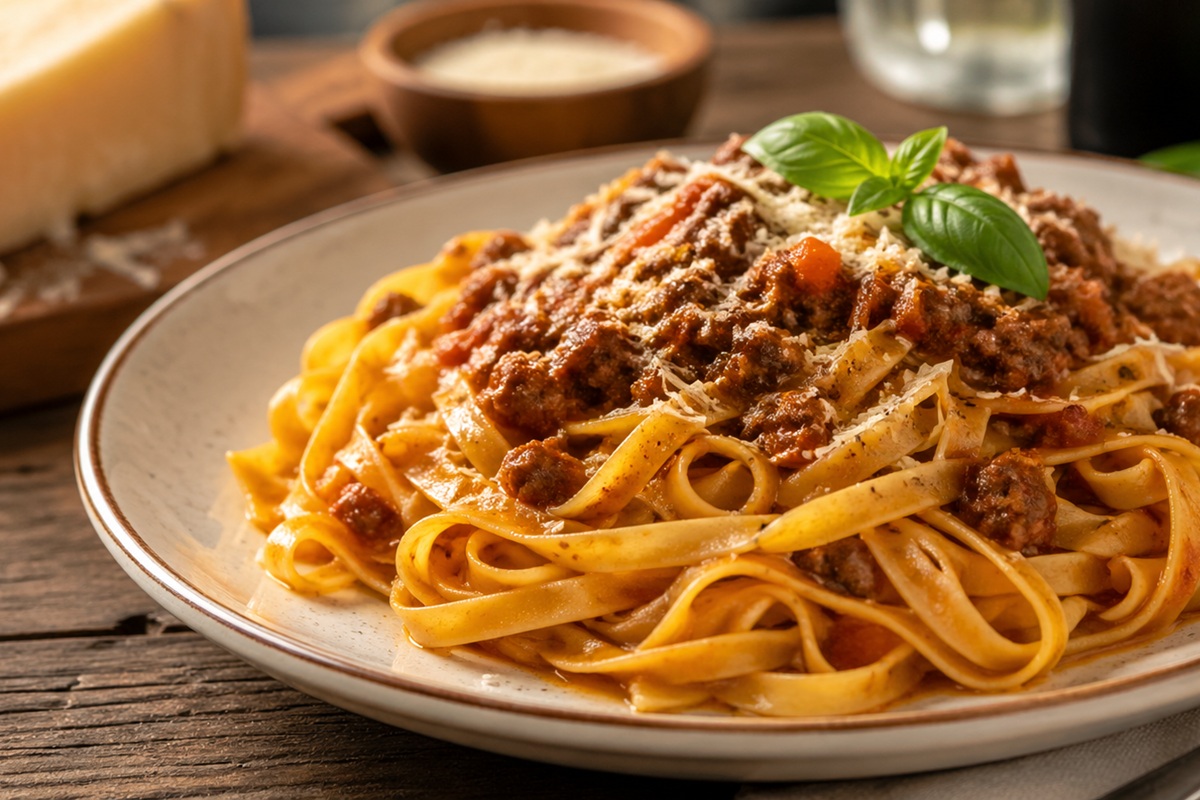
This is Bologna’s most famous dish: flat ribbon pasta served with a slow-cooked meat sauce. Outside Italy, it’s often called “spaghetti Bolognese,” but in Bologna, that doesn’t exist.
Italian term
Tagliatelle al ragù
Pronunciation
tah-lyah-TEL-leh al rah-GOO
Example sentence
Prendo le tagliatelle al ragù.
I’ll have the tagliatelle with meat sauce.
2. Tortellini in Brodo
What it is
Small, ring-shaped pasta filled with meat, served in a warm broth. It’s a comforting, traditional dish often eaten during holidays.
Italian term
Tortellini in brodo
Pronunciation
tor-tel-LEE-nee in BROH-doh
Example sentence
I tortellini in brodo sono buonissimi.
Tortellini in broth are delicious.
3. Lasagne alla Bolognese
What it is
Layers of pasta, ragù, béchamel sauce, and cheese baked together. This is the original lasagna from Bologna.
Italian term
Lasagne alla Bolognese
Pronunciation
lah-ZAHN-yeh ahl-lah boh-lo-NYEH-zeh
Example sentence
Vorrei una porzione di lasagne.
I would like a portion of lasagna.
4. Mortadella
What it is
A large Italian sausage made from finely ground pork, often with pistachios. It’s a classic cold cut from Bologna.
Italian term
Mortadella
Pronunciation
mor-tah-DEL-lah
Example sentence
La mortadella è molto famosa a Bologna.
Mortadella is very famous in Bologna.
5. Crescentine (Tigelle)
What it is
Small round breads, often filled with cured meats and cheeses. Perfect as a snack or light meal.
Italian term
Crescentine (also called tigelle)
Pronunciation
kreh-shen-TEE-neh / tee-JEL-leh
Example sentence
Mangiamo le crescentine con salumi.
Let’s eat crescentine with cured meats.
Essential Italian Food Words
To fully enjoy Bologna food, you’ll want to recognize these basic terms:
- pasta – pasta
- carne – meat
- formaggio – cheese
- pane – bread
- brodo – broth
- salumi – cured meats
- dolce – dessert
- conto – bill
These are core Italian food words you’ll see on almost every menu.
Italian Phrases for Restaurants
When you’re ready to order, these Italian phrases for restaurants will help you sound natural and confident:
- Vorrei questo. – I would like this.
- Cosa consiglia? – What do you recommend?
- È incluso il servizio? – Is service included?
- Possiamo avere il conto? – Can we have the bill?
- È molto buono! – It’s very good!
Use these phrases together with the dish names you’ve learned to build real conversations.
Talking About Taste in Italian
Want to describe what you’re eating? Try these:
- buono – good
- delizioso – delicious
- sapido – savory
- dolce – sweet
- ricco – rich
Example
Questo piatto è molto ricco e delizioso.
This dish is very rich and delicious.
Cultural Tips: Eating Like a Local in Bologna
Understanding food culture helps your language sound more natural:
- Italians usually eat slowly and socially—meals are meant to be enjoyed.
- Don’t expect cappuccino with meals; it’s typically a breakfast drink.
- Bread is often served without butter and used to enjoy sauces.
- Ordering multiple courses, such as a starter, pasta, and main, is common, but not required.
Knowing these habits makes your Italian feel more authentic—not just correct.
Learn Italian Vocabulary One Bite at a Time
Learning Italian doesn’t have to mean memorizing long word lists. When you connect words to real experiences—like tasting Bologna food—they stick naturally.
Start small:
- Learn one dish name
- Practice one sentence
- Use one new phrase at a time
Before you know it, you’ll not only recognize Italian food words, but also feel comfortable using real Italian phrases for restaurants.
And next time you sit down in Bologna, you won’t just eat like a local—you’ll speak like one too.