
Learning French is not only about grammar and vocabulary. To communicate naturally, you also need to understand French body language.
In France, gestures, facial expressions, eye contact, and greetings often add meaning to spoken words. A small shrug, a serious look, or a hand movement can show doubt, politeness, surprise, disagreement, or resignation.
For English-speaking French learners, understanding French gestures can help you avoid misunderstandings and feel more confident in real conversations.
Why Body Language Matters in French Culture
Words Are Only Part of the Message
In French communication, body language often supports what someone says.
For example, “C’est bon” can mean:
- “That’s good.”
- “That’s enough.”
- “That works.”
The meaning depends on the situation, tone, and facial expression.
This is why nonverbal communication in France is useful to understand. Even if you do not know every word, gestures can help you follow the conversation.
Politeness Is Nonverbal Too
In French culture, politeness is shown through both words and behavior.
When entering a shop, bakery, or café, it is polite to say:
Bonjour.
But how you say it also matters. Face the person, make brief eye contact, and speak calmly.
This small habit is an important part of everyday French etiquette.
Common French Gestures and Their Meanings
La Bise
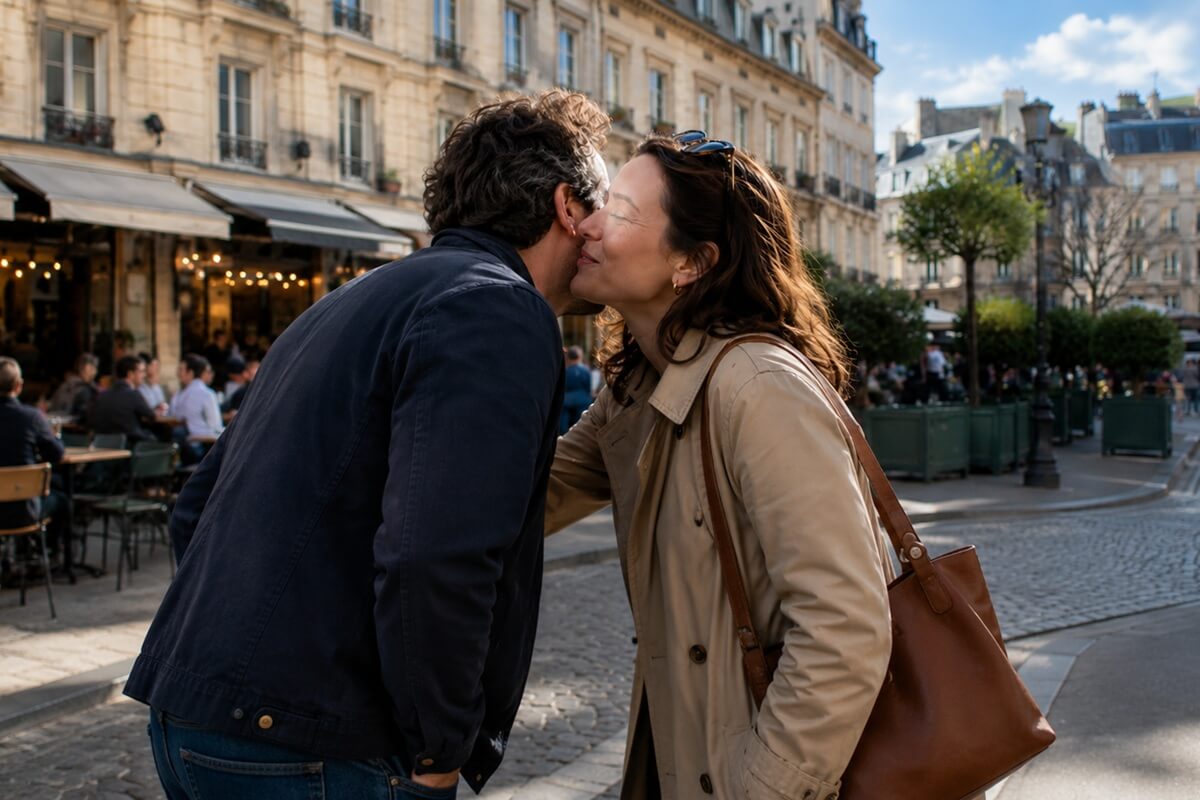
La bise is the famous cheek-to-cheek greeting. It is common among friends, family, and sometimes colleagues.
However, it depends on the relationship, region, and situation. If you are unsure, wait and follow the other person’s lead. In formal situations, a handshake is usually safer.
The French Shrug
The French shrug often includes raised shoulders, open hands, and a small facial expression.
It can mean:
- “I don’t know.”
- “What can you do?”
- “That’s just how it is.”
English speakers may think it looks dismissive, but it is often a normal way to show uncertainty, indifference, or resignation.
“Bof”
French speakers often say “Bof” with a shrug or slight pout.
It means something like:
- “So-so.”
- “Not great.”
- “I’m not impressed.”
For example:
Tu as aimé le film ?
Did you like the movie?
Bof.
It was okay / Not really.
The “Delicious” Gesture
When food is very good, French speakers may make a small gesture near the mouth with their fingertips.
It means something like:
“That’s delicious.”
However, this gesture is not unique to France and can feel playful or a little stereotypical. In many situations, it is more natural to simply say:
C’est délicieux.
It’s delicious.
The “I’ve Had Enough” Gesture
A flat hand near the neck, forehead, or above the head can express that something is excessive or frustrating.
It can mean:
- “I’ve had enough.”
- “I’m fed up.”
- “That’s too much.”
This gesture is close in meaning to the French expression:
J’en ai ras le bol.
I’m fed up.
It does not always mean “I’m full” after eating. If you want to say you are full after a meal, you can say:
Je n’ai plus faim.
I’m not hungry anymore.
Or:
Je suis rassasié(e).
I’m full / satisfied.
In informal situations, you may also hear:
J’en peux plus.
I can’t eat anymore / I’ve had enough.
Counting on Fingers
In France, people often start counting with the thumb.
So:
- thumb = one
- thumb + index finger = two
- thumb + index + middle finger = three
This is useful when ordering at a café, bakery, or market.
Tips for Communicating Naturally in France
Observe Before You Imitate
French body language can be expressive, but you do not need to copy every gesture immediately.
Watch how people use gestures in different situations. Pay attention to the relationship, setting, tone, and facial expression.
Context is very important.
Start With Safe Body Language
If you are still learning, start with simple and polite habits:
- say Bonjour before asking for something
- make brief eye contact
- use a calm voice
- keep relaxed posture
- smile naturally
- use a handshake in formal situations
These small actions can make your French sound and feel more natural.
Be Careful With Personal Space
In some French social situations, people may stand closer than English speakers expect. La bise may also feel personal at first.
However, French communication can still be formal. Warm greetings often go together with polite language and respectful behavior.
Do Not Misread Serious Expressions
French speakers may not always smile in public interactions. This does not automatically mean they are rude or unfriendly.
A neutral expression can simply be normal. In France, politeness is often shown through greetings, tone, and respectful language rather than constant smiling.
Expect Expressive Conversations
French conversations may include strong facial expressions, hand gestures, or direct disagreement.
This can feel intense for English speakers, but it does not always mean conflict. Often, it simply shows that the speaker is engaged.
Conclusion
French body language is an important part of understanding real French communication. Gestures, greetings, facial expressions, and eye contact can all change how a message feels.
By learning common French gestures and basic French etiquette, you can better understand French culture and avoid small misunderstandings.
You do not need to use every gesture perfectly. Observe first, use simple body language respectfully, and let your gestures become natural over time.
When you learn French body language together with words and grammar, you communicate with more confidence and cultural awareness.