
The Mid-Autumn Festival is one of the best-known traditional celebrations in Chinese culture. If you are learning Chinese, understanding this festival can help you discover much more than a few new words. It introduces you to important cultural ideas about family, togetherness, seasonal change, and the symbolism of the moon.
During the festival, families may gather for a meal, share mooncakes, admire the full moon, and exchange good wishes. Customs are not exactly the same everywhere, and different families and regions may celebrate in different ways. Still, the themes of reunion and the full moon are strongly associated with the Chinese Mid-Autumn Festival.
What Is the Mid-Autumn Festival?
The Mid-Autumn Festival is a traditional Chinese festival celebrated on the 15th day of the eighth month of the traditional Chinese lunisolar calendar. Because the traditional calendar does not match the Gregorian calendar exactly, the festival falls on a different date each year, usually in September or early October.
In Chinese, the festival is called 中秋节 (Zhōngqiū Jié). 中秋 (zhōngqiū) means “mid-autumn,” while 节 (jié) means “festival” or “holiday.” The name reflects the festival’s connection with the autumn season.
For many people, one of the most important ideas behind the celebration is family reunion. The round full moon has traditionally been connected with completeness and togetherness. When family members live far apart, looking at the same moon can also carry an emotional meaning: even when people are separated by distance, they remain connected.
This idea appears often in Chinese poetry, art, and traditional expressions. The moon can symbolize longing for home, missing loved ones, or hoping for reunion. That is one reason the Mid-Autumn Festival has such a strong emotional place in Chinese culture.
Food is another important part of the celebration. The most famous festival food is the mooncake, a round pastry that can contain many different fillings. Traditional varieties may include lotus seed paste, red bean paste, nuts, or salted egg yolk, while modern versions can feature chocolate, fruit, ice cream, or other creative flavors.
Because mooncakes are usually round, their shape also connects naturally with the full moon and the idea of completeness. People often give beautifully packaged mooncakes to relatives, friends, colleagues, or business contacts. The exact customs surrounding gifts and meals vary, but sharing food remains an important part of many celebrations.
Traditions, Legends, and Symbolism
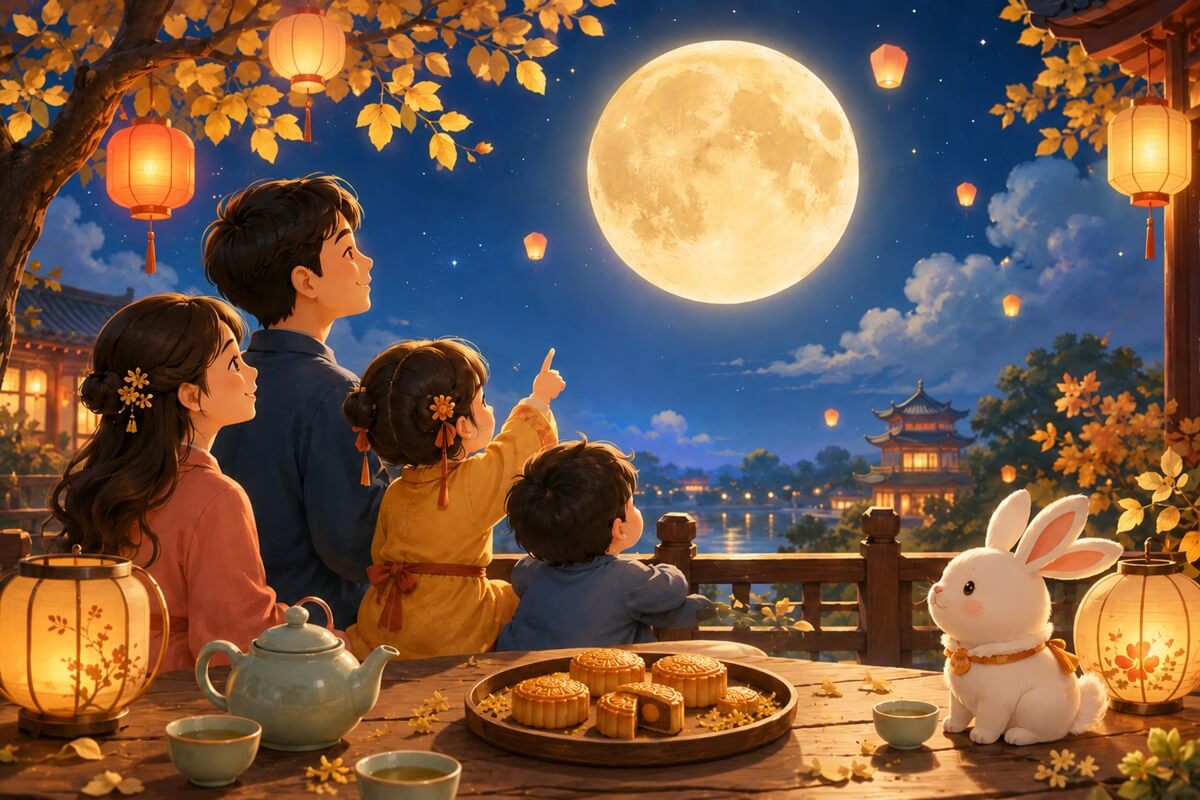
One of the simplest Mid-Autumn Festival traditions is appreciating the moon. Families or friends may go outside after dinner, sit together, eat snacks, drink tea, and look at the night sky. In some places, parks and public spaces become especially lively during the festival.
The full moon is more than a beautiful sight. In traditional symbolism, its round shape can represent unity and reunion. This connection helps explain why family gatherings are so closely associated with the holiday.
Another well-known part of the festival is the legend of Chang’e, or 嫦娥 (Cháng’é), a mythical woman associated with the moon. Several versions of the story exist, but many involve Chang’e leaving the human world and living on the moon after taking a special medicine connected with immortality.
This story belongs to Chinese mythology and folklore rather than confirmed historical fact. Over time, Chang’e became one of the most recognizable cultural figures connected with the Mid-Autumn Festival. Images of her, the moon, and other legendary figures often appear in festival decorations and artwork.
Another figure you may encounter is the Jade Rabbit, known as 玉兔 (Yùtù). According to traditional legends, this magical rabbit lives on the moon. The details vary between stories, but the Jade Rabbit has become another popular symbol of the festival and frequently appears in illustrations, lanterns, toys, and modern designs.
Lanterns are also associated with Mid-Autumn celebrations in some regions, especially among children. You may see colorful lantern displays, decorative lights, or lantern-related activities. However, customs can differ considerably by region, so lantern traditions may be more prominent in some communities than in others.
In modern China, the festival combines older traditions with contemporary lifestyles. Some families organize a large meal at home, while others eat at restaurants or travel to visit relatives. People may send digital greetings, order mooncakes online, attend cultural events, or simply enjoy a day with family.
Modern mooncakes also show how traditions can change while keeping their cultural meaning. Bakeries and restaurants now produce many unusual flavors and designs, but mooncakes still remain closely linked with the Mid-Autumn Festival. For many people, receiving or sharing them immediately signals that the festival season has arrived.
Useful Chinese Vocabulary for the Festival
Learning a few festival-related words can make the Chinese Mid-Autumn Festival more meaningful. These expressions also give you useful examples of how language and culture connect.
中秋节 — Zhōngqiū Jié — Mid-Autumn Festival
This is the standard Chinese name for the festival. You can use it when talking about holiday plans, traditions, or celebrations.
For example, 中秋节快乐!(Zhōngqiū Jié kuàilè!) means “Happy Mid-Autumn Festival!” It is a friendly greeting you can use with Chinese-speaking friends, classmates, or colleagues.
月亮 — yuèliang — moon
The moon is one of the central symbols of the festival. You may hear people talk about 看月亮 (kàn yuèliang), literally “look at the moon.”
A more traditional expression is 赏月 (shǎng yuè), meaning “to appreciate or admire the moon.” This phrase suggests enjoying the beauty of the moon rather than simply looking at it.
月饼 — yuèbǐng — mooncake
The word combines 月 (yuè), “moon,” and 饼 (bǐng), a word used for various kinds of flat cakes, pastries, or similar foods. Mooncakes are one of the most recognizable foods associated with Mid-Autumn Festival traditions.
You might hear the sentence 我们吃月饼吧 (Wǒmen chī yuèbǐng ba), meaning “Let’s eat mooncakes.”
团圆 — tuányuán — reunion / being together again
This is an especially useful cultural word. 团圆 often refers to family members coming together after being apart, especially during important holidays.
The related phrase 团圆饭 (tuányuán fàn) means a “reunion meal.” While the expression can be associated with different family celebrations, the idea of eating together as a family fits naturally with the spirit of the Mid-Autumn Festival.
家人 — jiārén — family members
家 (jiā) means “home” or “family,” and 人 (rén) means “person” or “people.” During the Mid-Autumn Festival, spending time with 家人 is important for many families.
Knowing these words will also help you notice cultural themes when you encounter Chinese holiday greetings, advertisements, stories, or conversations.
Conclusion
The Mid-Autumn Festival is much more than a celebration involving mooncakes and a bright full moon. It reflects important themes in Chinese culture, especially family reunion, togetherness, seasonal beauty, and the emotional connection between people who may be far apart.
Traditional legends such as the story of Chang’e and the Jade Rabbit add mythology and imagination to the festival, while practices such as eating mooncakes and appreciating the moon continue to connect older customs with modern life. At the same time, celebrations are diverse, and individual families and regions may observe the holiday in different ways.
For Chinese learners, the festival is also a useful opportunity to connect vocabulary with real cultural meaning. Words such as 中秋节, 月饼, 赏月, and 团圆 are easier to remember when you understand the traditions and ideas behind them.
So when you next hear someone say 中秋节快乐!, you will understand more than the words themselves. You will also understand the cultural message behind the greeting: a wish for happiness, togetherness, and a meaningful Mid-Autumn Festival.