

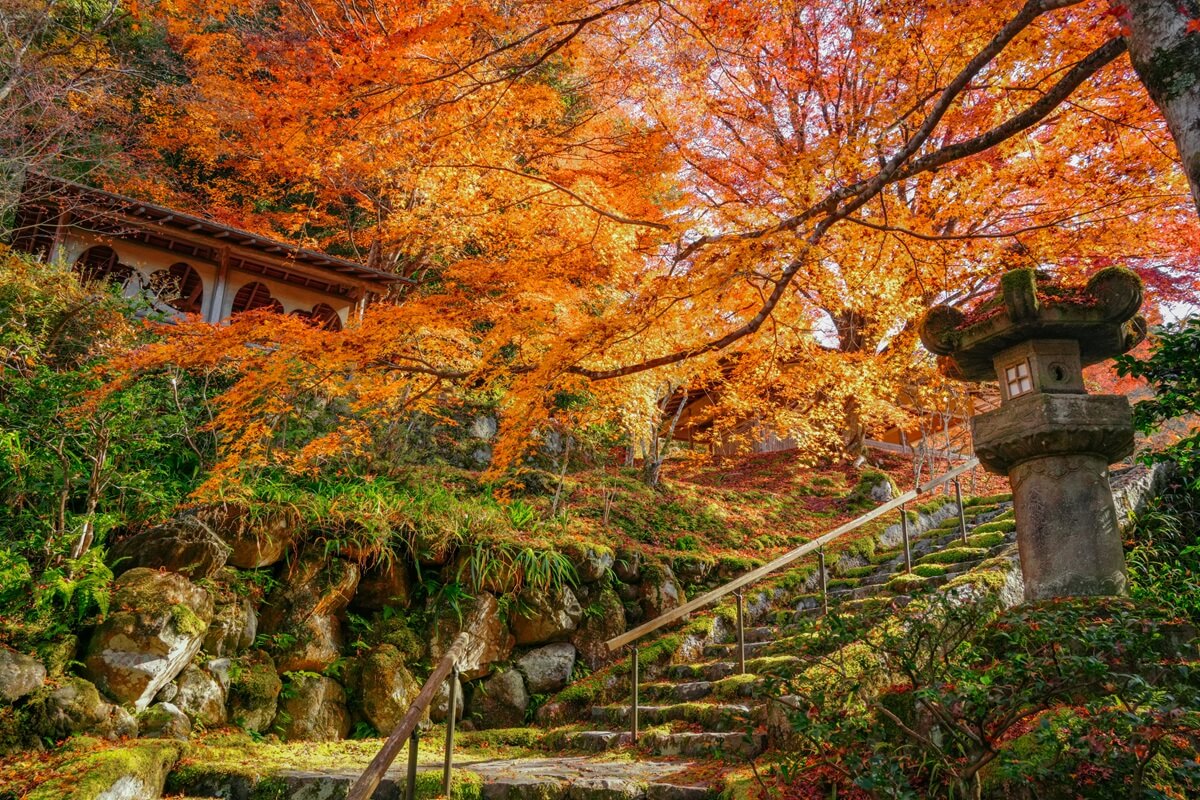
Autumn in Japan is more than just cooler weather and changing leaves.
From October into November, parks turn red and gold, schools hold sports events, local festivals fill the streets, and seasonal foods start appearing everywhere.
It is also a great time to learn a few Japanese words that are closely connected with the season.
Here are some of the sights, events, and expressions that make autumn in Japan special.
1. Kōyō — Autumn Leaves
One of the biggest signs of autumn in Japan is 紅葉 (kōyō), meaning “autumn leaves” or “fall colors.”
As temperatures drop, mountains, parks, and temple gardens gradually turn red, orange, and yellow. Many people take day trips specifically to enjoy the scenery.
Another useful word is:
紅葉狩り (momijigari) — going to see autumn leaves
The word gari usually means “hunting,” but nobody is actually hunting leaves. It refers to going out to admire the seasonal colors.
You might hear:
紅葉がきれいですね。
Kōyō ga kirei desu ne.
“The autumn leaves are beautiful, aren’t they?”
It is one of the easiest seasonal phrases to use while traveling in Japan.
2. Undōkai — School Sports Day
Another familiar autumn scene is 運動会 (undōkai), or sports day.
Schools often organize a full day of races, team competitions, relays, and other activities. Parents may come to watch, and students are usually divided into teams.
A closely related national holiday is スポーツの日 (Supōtsu no Hi), or Sports Day, which is celebrated in October.
Useful words include:
- 運動会 (undōkai) — sports day
- リレー (rirē) — relay race
- 応援 (ōen) — cheering or supporting
- チーム (chīmu) — team
You may hear students shout:
がんばれ!
Ganbare!
“Go!” / “Do your best!”
It is a very common expression of encouragement in Japanese.
3. Aki Matsuri — Autumn Festivals
Spring and summer are famous for festivals, but autumn has plenty of them too.
秋祭り (aki matsuri) means “autumn festival.”
Traditionally, many autumn festivals are connected with giving thanks for the harvest. Depending on the region, you may see portable shrines, drums, parades, food stalls, or traditional performances.
A few useful festival words are:
- 祭り (matsuri) — festival
- 神輿 (mikoshi) — portable shrine
- 屋台 (yatai) — food stall or festival stall
If you visit one, you might say:
お祭り、にぎやかですね。
Omatsuri, nigiyaka desu ne.
“The festival is lively, isn’t it?”
4. Shokuyoku no Aki — “Autumn Is the Season for Eating”
Japan has several expressions describing the pleasures of autumn. One of the most popular is:
食欲の秋 (shokuyoku no aki)
It literally means “autumn of appetite,” or more naturally, “autumn is the season for eating.”
The phrase makes sense when you look at the foods associated with the season.
Autumn specialties include:
- 栗 (kuri) — chestnuts
- さつまいも (satsumaimo) — sweet potatoes
- 柿 (kaki) — persimmons
- きのこ (kinoko) — mushrooms
- さんま (sanma) — Pacific saury
Seasonal menus and sweets featuring chestnuts or sweet potatoes are especially easy to find at this time of year.
Another word you may see is:
旬 (shun) — the best or peak season for a food
Eating ingredients at their shun is an important idea in Japanese food culture.
5. Dokusho no Aki — Autumn Is for Reading
Food is not the only thing associated with autumn.
You may also hear:
読書の秋 (dokusho no aki) — “autumn is the season for reading”
Cooler temperatures and longer evenings have helped create an image of autumn as a good time to slow down and enjoy a book.
Similarly, there is:
スポーツの秋 (supōtsu no aki) — “autumn is the season for sports”
These expressions show how strongly the season is connected with particular activities in Japan.
You can even make your own playful version:
勉強の秋 (benkyō no aki) — “autumn is the season for studying”
For language learners, that one may be particularly useful.
6. Shichi-Go-San — A November Tradition for Children
November also brings 七五三 (Shichi-Go-San), a traditional celebration for children.
The name literally means “seven-five-three.” Families celebrate children at certain ages and may visit a Shinto shrine to pray for their health and growth.
Children often wear formal clothing, including kimono, so in November you may see beautifully dressed families around shrines.
A sweet associated with the occasion is:
千歳飴 (chitose ame) — “thousand-year candy”
The long candy symbolizes wishes for a long and healthy life.
7. Aki — A Simple Word You Will Hear Everywhere
Finally, the most useful autumn word of all:
秋 (aki) — autumn
You can combine it with many other words:
- 秋空 (akizora) — autumn sky
- 秋風 (akikaze) — autumn breeze
- 秋晴れ (akibare) — clear, pleasant autumn weather
- 秋祭り (aki matsuri) — autumn festival
A simple sentence to remember is:
秋が一番好きです。
Aki ga ichiban suki desu.
“Autumn is my favorite season.”
Enjoying Autumn in Japan
Japanese autumn has its own rhythm.
October brings sports events, festivals, and the first signs of changing leaves. As November arrives, the colors deepen, seasonal foods fill shops and restaurants, and traditions such as Shichi-Go-San become part of the scenery.
Learning words such as kōyō, momijigari, undōkai, and shokuyoku no aki can help you understand more than vocabulary. They also reveal how people in Japan experience the season.
So if you find yourself in Japan this autumn, look beyond the red leaves. Listen to the words around you too — they are part of the season.