

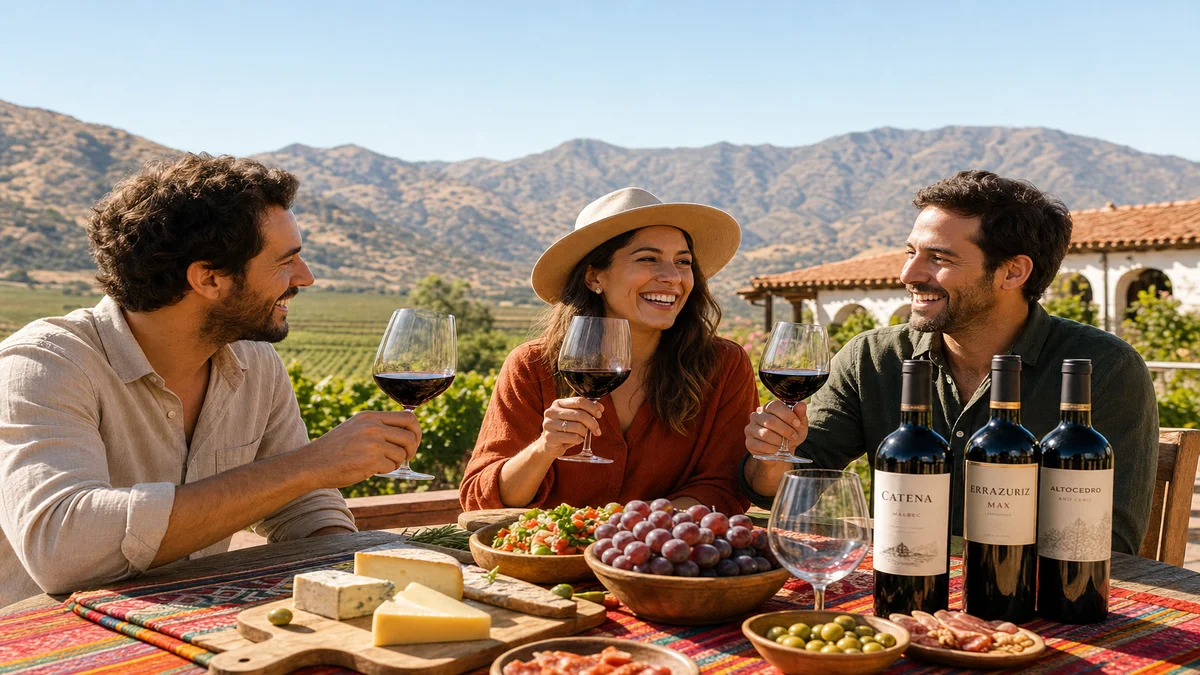
Picture yourself standing in a sun-drenched vineyard, the Andes Mountains towering behind you as you swirl a glass of deep red Malbec. You’re ready to discuss the wine’s characteristics with the sommelier, but there’s just one problem: all the wine terms are in Spanish. Don’t worry—this happens to travelers all the time in South America’s incredible wine regions.
South America has quietly become one of the world’s most exciting wine destinations. From Argentina’s high-altitude vineyards to Chile’s coastal valleys, this continent offers extraordinary wines at surprisingly accessible prices. The region produces everything from bold reds that rival European classics to crisp whites perfect for warm afternoons.
Whether you’re planning a wine tour through Mendoza or simply want to navigate a Spanish wine menu with confidence, understanding the essential vocabulary will transform your experience. Let’s explore the language of South American wine and discover why this region deserves a spot on every wine lover’s bucket list.
Essential Spanish Wine Vocabulary for Beginners
Learning key Spanish wine terms opens doors to authentic experiences in wine regions across Argentina, Chile, and Uruguay. These words form the foundation of any wine conversation in Spanish-speaking countries.
Vino simply means “wine” in Spanish. You might hear it pronounced slightly differently across regions, but this basic term gets you started. Vino blanco refers to white wine, while vino tinto means red wine—think of “tinted” to remember this one.
Vino rosado describes rosé wines, and vino espumoso indicates sparkling wine made in the traditional method but produced outside France’s Champagne region. You might also encounter cava, referring to Spanish-style sparkling wine that’s sometimes produced in South American wineries.
The terms reserva and gran reserva appear frequently on South American wine labels, though their meanings vary by country. In Argentina, reserva typically indicates red wines aged for at least one year, while in Chile, it often refers to higher alcohol content rather than aging requirements.
Describing Wine Characteristics in Spanish
Understanding descriptive wine terms helps you communicate preferences and interpret tasting notes during vineyard visits or restaurant experiences.
Aroma refers to a wine’s smell or bouquet—the same word works in both English and Spanish. Añejo means “aged” or “mature,” describing wines that have spent time developing in barrels or bottles. Conversely, joven means “young,” indicating wines consumed shortly after production.
Dulce and seco represent the sweetness spectrum—sweet and dry, respectively. Many South American wines, particularly those from Brazil, tend toward sweeter profiles than European counterparts. Roble indicates oak aging, an important factor in wine complexity.
When discussing wine appearance and taste, la vista refers to visual characteristics, while en boca describes mouthfeel—how the wine feels in your mouth. Equilibrado means balanced, describing wines where all elements work harmoniously together.
Navigating Wine Menus and Ordering
Practical vocabulary for restaurant and winery situations ensures smooth interactions when ordering wine in Spanish-speaking countries.
A bodega can mean either a winery or wine cellar, and many restaurants use this term for their wine storage areas. La carta de vinos is the wine menu—your roadmap to local selections. When ready to order, request una botella (a bottle) or una copa (a glass).
Una cata refers to a wine tasting, perfect for exploring multiple varieties. Grados indicates alcohol percentage—so “11 grados” means 11% alcohol content. For casual drinking, try tinto de verano, a refreshing mixture of inexpensive wine and soda, popular during warm weather.
Argentina’s Premier Wine Regions
Argentina has emerged as a global wine powerhouse, offering exceptional value and stunning vineyard landscapes across diverse geographic regions.
The northern provinces of Salta, Catamarca, Jujuy, and Tucumán feature some of the world’s highest vineyards, reaching elevations of 3,339 meters above sea level. These extreme altitudes create unique growing conditions that favor Torrontés, a distinctive white grape variety with Malvasia-like characteristics. The region also produces excellent Cabernet Sauvignon, Malbec, Merlot, and Tannat varieties.
The Cuyo region, encompassing Mendoza, La Rioja, and San Juan provinces, represents Argentina’s wine heart. Situated on the eastern slopes of the Andes Mountains, this area produces the majority of Argentina’s wine and ranks among South America’s most important wine regions.
Mendoza province stands out as Argentina’s wine capital, combining world-class wineries with breathtaking natural attractions like Mount Aconcagua. The region offers diverse experiences, from intimate family-run bodegas nestled in rolling valleys to large, modern facilities producing internationally recognized wines. Mendoza’s Malbec wines have gained particular acclaim worldwide for their depth and character.
Chile’s Diverse Wine Landscapes
Chile’s unique geography—squeezed between the Andes Mountains and Pacific Ocean—creates ideal conditions for wine production across dramatically different terroirs.
The Central Valley houses Chile’s most famous wine appellations, including the Colchagua, Maipo, and Maule valleys. The Colchagua Valley extends from Andes foothills to Pacific coastline, creating diverse microclimates within a single region. Its warm, dry conditions particularly favor Cabernet Sauvignon, Carmenère, and Syrah varieties.
The Maipo Valley surrounds Santiago and includes some of Chile’s oldest and most prestigious wineries. This region excels at producing Cabernet Sauvignon and has established Chile’s reputation for world-class red wines.
Chilean wineries span from the Atacama Desert’s arid northern regions to the cool, wet southern territories. This geographic diversity allows Chile to produce an remarkable range of wine styles, from crisp Sauvignon Blanc in coastal areas to bold reds in warmer interior valleys.
Understanding South American Grape Varieties
Different grape varieties thrive in specific South American regions due to unique soil compositions, climate patterns, and elevation levels.
Malbec has become Argentina’s signature grape, producing full-bodied red wines with dark fruit flavors and smooth tannins. Originally from France, Malbec found its perfect home in Argentina’s high-altitude vineyards, particularly in Mendoza province.
Carmenère represents Chile’s distinctive contribution to world wine. Once thought extinct, this grape variety was rediscovered in Chilean vineyards and now produces wines with herbal notes and medium body. Torrontés offers Argentina’s answer to aromatic white wines, creating floral, fruity wines perfect for warm climates.
Tannat thrives in Uruguay’s climate, producing robust red wines with high tannin content. Meanwhile, Brazilian regions excel at producing Chardonnay and Moscato Branco, often crafted into sweeter styles that reflect local preferences.
Planning Your South American Wine Adventure
South American wine regions offer incredible value for wine tourism, combining exceptional wines with stunning natural beauty and affordable travel costs.
The best time to visit varies by region, but harvest season (February through April) provides exciting opportunities to witness winemaking processes firsthand. Many wineries offer comprehensive tours including vineyard walks, barrel tastings, and food pairings featuring local cuisine.
Consider the altitude when planning your visit—high-elevation vineyards may require adjustment time, but they offer unparalleled views and unique growing conditions you won’t find elsewhere. Pack layers, as mountain vineyard temperatures can fluctuate dramatically between day and night.
Transportation between wineries often requires advance planning, as many boutique producers are located in remote areas. Many regions offer organized wine tours, or you can rent a car for more flexibility in exploring hidden gems.
South America’s wine regions combine exceptional quality with authentic cultural experiences and breathtaking landscapes. Whether you’re savoring a perfectly aged Malbec while watching the sunset over the Andes or discovering a small family winery in a hidden valley, these destinations offer wine experiences that rival any in the world.
Armed with essential Spanish wine vocabulary and knowledge of major regions, you’re ready to explore South America’s incredible wine offerings. From ordering confidently in restaurants to engaging meaningfully with winemakers, understanding the language enhances every aspect of your wine journey. So raise your copa and toast to your next South American wine adventure—¡salud!