
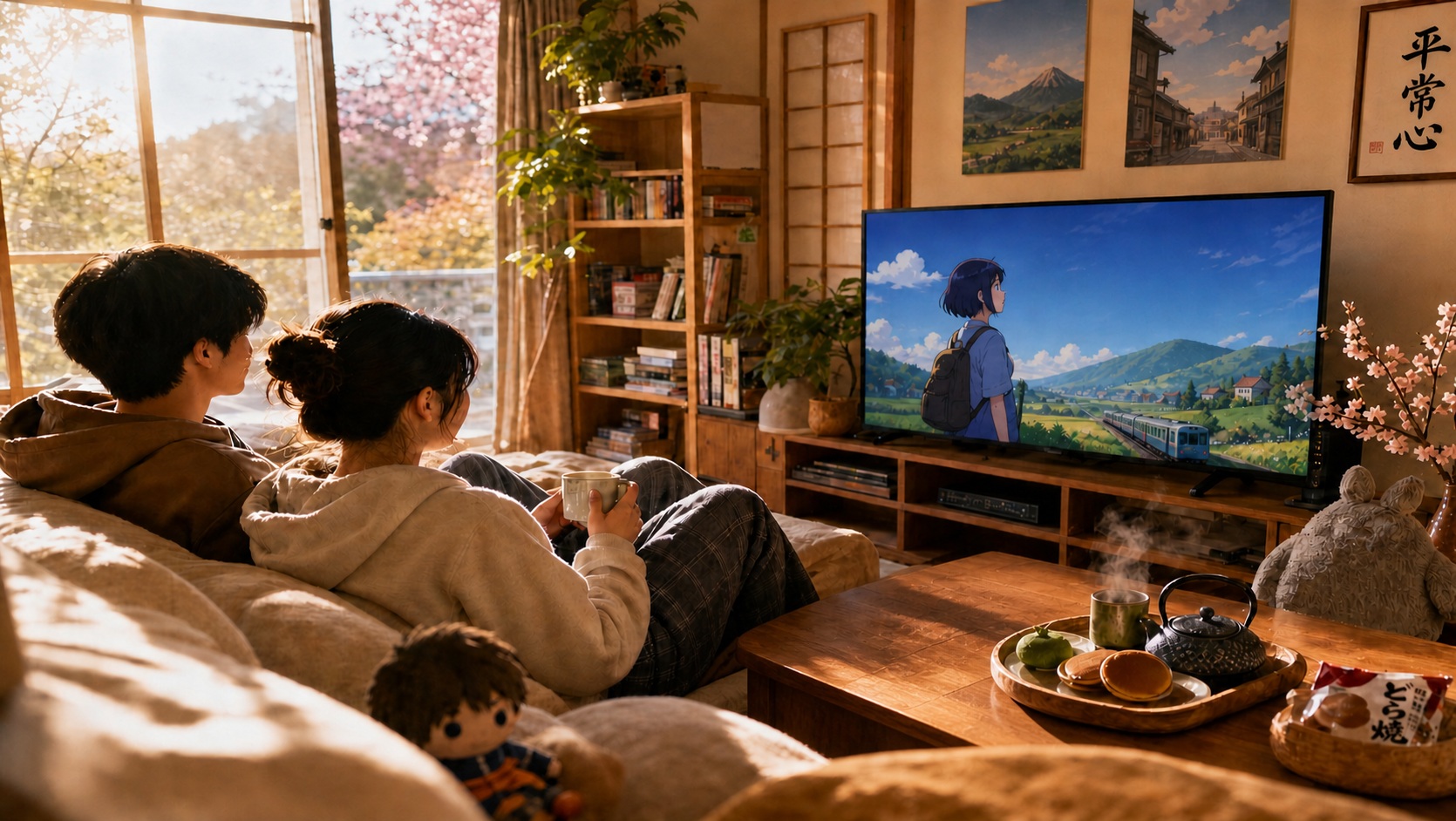
Picture this: you’re binge-watching your favorite anime series when suddenly you realize you understood a character’s joke without reading the subtitles. That moment of comprehension feels magical, doesn’t it? For many language enthusiasts, anime serves as both entertainment and a gateway to mastering Japanese.
While traditional textbooks teach you formal grammar structures, anime exposes you to natural speech patterns, cultural nuances, and the rhythm of everyday Japanese conversation. But can you really learn Japanese effectively through anime alone? The answer is both yes and no.
Anime can absolutely accelerate your Japanese learning journey, particularly for developing listening skills and cultural awareness. However, using it as your sole learning method might leave gaps in your foundation. The most successful approach combines anime immersion with structured learning for comprehensive language development.
Why Anime Works for Japanese Learning
Anime offers unique advantages that traditional learning materials often lack. The visual context helps you understand meaning even when you don’t catch every word. Characters’ facial expressions, body language, and situational context provide crucial comprehension clues.
The repetitive nature of anime dialogue patterns also reinforces common phrases and sentence structures. You’ll hear characters say “Ohayo gozaimasu” (good morning) or “Arigato gozaimasu” (thank you) countless times, naturally cementing these expressions in your memory.
Additionally, anime exposes you to different speech levels and formality registers. You’ll hear casual conversations between friends, formal exchanges with authority figures, and everything in between. This variety prepares you for real-world Japanese interactions.
Effective Strategies for Learning Japanese Through Anime
Choose the Right Genre
Not all anime genres offer equal learning value. Slice-of-life comedies typically feature everyday conversations using practical vocabulary you’ll actually use. School-based anime introduces educational settings and student interactions, while workplace anime showcases professional language.
Fantasy and sci-fi anime, while entertaining, often include specialized terminology that won’t help much in daily conversations. However, don’t feel restricted to “educational” genres only. Your genuine interest in the content matters more than perfect linguistic utility.
Master the Subtitle Strategy
The subtitle debate rages on among language learners, but here’s a balanced approach: use both Japanese and English subtitles strategically. Japanese subtitles help you connect spoken words with their written forms, building your reading skills simultaneously.
English subtitles ensure you don’t miss important plot points, keeping you engaged with the story. Start episodes with both subtitles enabled, then replay favorite scenes with only Japanese subtitles, and finally try sections without any subtitles for pure listening practice.
Build Your Vocabulary Arsenal
Keep a dedicated anime vocabulary notebook. When you encounter interesting words or phrases, jot them down with their meanings and the context in which they appeared. This contextual learning helps you remember when and how to use new vocabulary appropriately.
Review your notes regularly and try creating your own sentences using the new words. This active practice transforms passive recognition into active recall, making the vocabulary truly yours.
Top Anime Recommendations for Japanese Learners
Beginner-Friendly Options
Shirokuma Cafe tops the list for beginners. This charming series about animals running a café uses simple, everyday language perfect for grasping natural conversation patterns. The relaxed pace gives you time to process what you’re hearing.
K-On! offers insight into Japanese high school life through the adventures of a music club. The casual friendship dynamics introduce you to informal Japanese while the school setting provides educational vocabulary.
Intermediate Challenges
Barakamon presents more complex dialogue and even includes rural dialect variations. Following a calligrapher’s journey to a remote island, this anime exposes you to different speech patterns and cultural perspectives.
Natsume’s Book of Friends blends everyday conversations with supernatural elements, introducing you to Japanese folklore terminology while maintaining accessible dialogue levels.
Advanced Learning
Haikyuu!! delivers fast-paced sports commentary alongside character development. The volleyball setting introduces specialized vocabulary while the emotional storylines showcase various speech styles and intensity levels.
Detective Conan offers the ultimate challenge with over 1100 episodes featuring diverse characters, dialects, and formal investigative language. The mystery format keeps you engaged while exposing you to sophisticated Japanese usage.
Understanding Anime-Specific Language
Anime characters sometimes use exaggerated expressions or archaic phrases that don’t appear in modern conversations. Learning to identify these “anime-only” expressions prevents you from sounding overly dramatic in real-life situations.
Pay attention to how different characters speak based on their age, social status, and relationships. A teenage protagonist speaks differently than their teacher, and these distinctions reflect important aspects of Japanese social hierarchy.
Cultural Learning Through Anime
Anime serves as a window into Japanese culture beyond just language. School festivals, traditional holidays, family dynamics, and social customs all appear naturally in storylines. Research these cultural elements to deepen your understanding of the context behind the language.
When characters bow, use honorifics, or follow specific etiquette rules, you’re witnessing real cultural practices. Understanding these behaviors helps you comprehend not just what characters are saying, but why they’re saying it in particular ways.
Common Anime Phrases to Know
Certain expressions appear repeatedly across different anime series. “Hai” (yes), “Arigato” (thank you), and “Sumimasen” (excuse me/sorry) form the foundation of polite interaction. “Ganbatte” (good luck/do your best) encourages others, while “Okaeri” (welcome home) and “Tadaima” (I’m home) mark daily transitions.
Exclamations like “Sugoi!” (amazing) and “Yabai!” (whoa/dangerous) add emotional color to conversations. Learning these expressions helps you understand character reactions and emotional states.
Maximizing Your Anime Learning Experience
Create a structured approach to anime consumption. Set specific goals for each viewing session – perhaps focusing on new vocabulary one day and pronunciation practice the next. Use shadowing techniques by repeating lines after characters to improve your speaking skills.
Join online communities where other learners discuss anime and Japanese language topics. Sharing observations and asking questions about confusing dialogue enriches your learning experience through collaborative discovery.
Beyond Entertainment: Making Real Progress
While anime provides excellent exposure to Japanese, supplement your viewing with structured grammar study and speaking practice. The combination of entertaining input through anime and systematic learning through formal study creates a powerful language acquisition environment.
Consider keeping a viewing log to track your progress. Note which series you understand better over time and celebrate those moments when you catch jokes or emotional nuances without subtitle help.
Learning Japanese through anime transforms study time into entertainment time, making consistent practice feel effortless. Whether you’re drawn to heartwarming slice-of-life stories or action-packed adventures, there’s an anime series perfectly suited to your interests and learning level. Start with beginner-friendly options, develop effective viewing strategies, and watch your Japanese comprehension grow naturally as you enjoy compelling stories and unforgettable characters.