

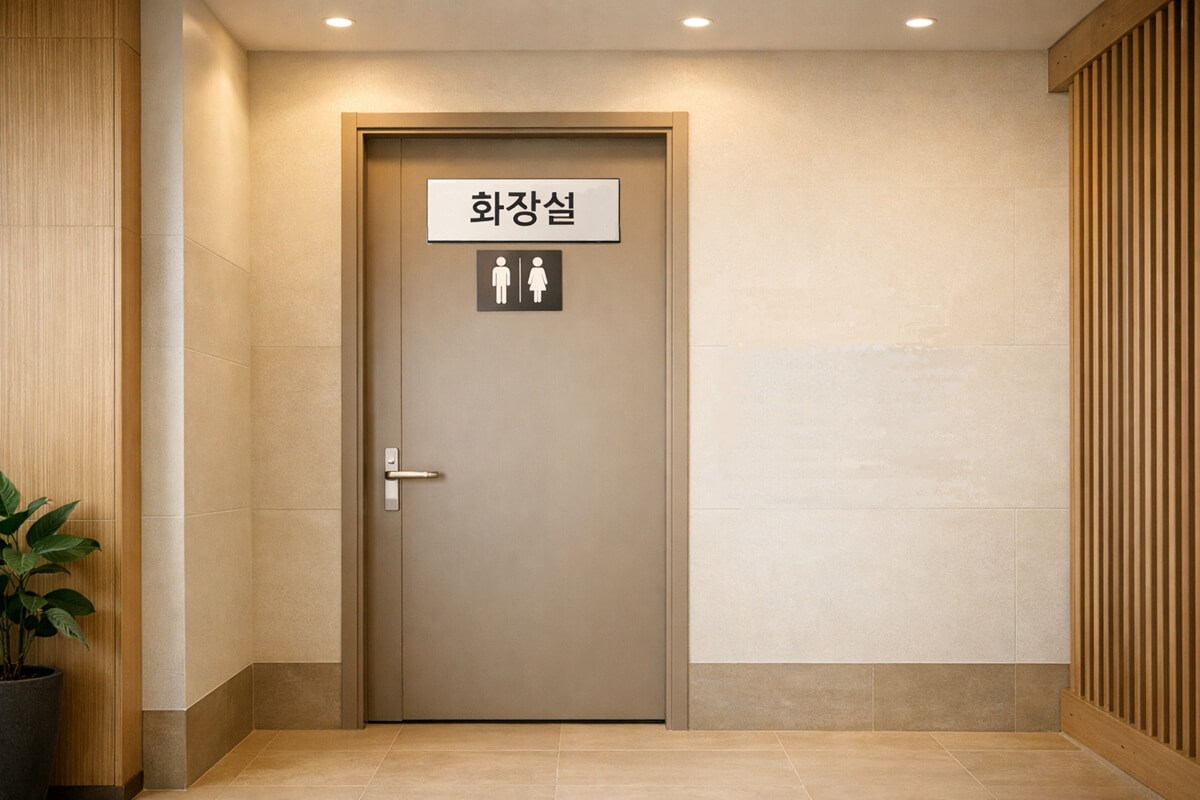
Language learning is not limited to classrooms or textbooks. In fact, many memorable words and phrases are learned through everyday experiences—ordering food, taking the bus, or asking where the restroom is.
Bathrooms might seem like an unusual topic for learning about Korean culture, but they actually reveal a lot about daily life and social customs. When visiting a new country, one of the first practical questions travelers ask is: “Where is the restroom?”
Korea’s bathroom culture often surprises visitors. Public restrooms are frequently clean and well-maintained, and many are equipped with modern technology. At the same time, there are cultural details that may surprise first-time visitors—such as where toilet paper is located or how restroom signs are written.
With this guide, you will learn:
- Interesting facts about Korean toilet culture
- Useful Korean bathroom vocabulary
- Korean phrases helpful for travelers
- Cultural insights about restrooms in Korea
By the end of this article, you will know how to ask where the restroom is in Korean and better understand the cultural nuances of Korean restroom etiquette.
Quick Overview: What Visitors Notice About Toilets in Korea
Before we dive deeper, here are a few things many foreigners quickly notice about restrooms in Korea:
- Many public toilets are extremely clean
- High-tech bidet toilets are common
- Toilet paper is sometimes placed outside the stall
- Some bathrooms have emergency toilet paper dispensers
- Restroom signs often use the word 화장실 (hwajangsil), which literally means “makeup room”
- Family restrooms and accessible facilities are widely available in large buildings
Another interesting aspect is how much Korea invests in public restroom facilities. Large subway stations, parks, shopping malls, and tourist areas usually provide well-maintained public toilets.
For travelers, understanding these restroom customs can make daily life much easier. Learning some Korean bathroom vocabulary can also be very helpful.
15 Interesting Facts About Toilets in Korea
1. Many Public Toilets Are Extremely Clean
One of the first things many visitors notice is that public restrooms in Korea are often very clean. In large cities especially, public facilities in subway stations, department stores, shopping malls, and tourist areas are usually well-maintained.
2. High-Tech Toilets Are Common
Korea is known for modern convenience, and toilets are no exception. Some toilets also include electronic bidet functions such as:
- heated seats
- adjustable water jets
- drying functions
- deodorizing functions
- automatic flushing
These toilets are known as 비데 (bide) in Korean.
If you are not familiar with these toilets, the control panel might look a little intimidating at first!
3. Korea Invests in Public Restroom Facilities
Large subway stations, parks, shopping malls, and tourist areas usually provide public toilets that are easy to access. This makes daily life more convenient for both residents and visitors.
4. Toilet Paper May Be Outside the Stall
In some public restrooms, you might notice something unusual:
The toilet paper is located outside the stall.
Users take the amount of toilet paper they need before entering the stall. This custom dates back to older plumbing systems that could not handle large amounts of paper.
Although plumbing systems have improved, this arrangement still exists in some public restrooms today.
5. Emergency Toilet Paper Machines Exist
Some restrooms have automatic toilet paper machines.
When you press a button, the machine dispenses a small amount of toilet paper. This can be very helpful if you forgot to grab paper before entering the stall.
These machines are especially common in older public facilities such as subway stations.
6. Squat Toilets Still Exist
Although modern toilets are now standard in most places, you may still encounter squat toilets in some locations.
These are more common in:
- older subway stations
- rural areas
- traditional markets
- older public facilities
Some people still prefer squat toilets because they believe they are more sanitary.
7. Public Restroom Signs Can Be Creative
Restroom signs in Korea are usually simple and easy to recognize.
They may include:
- words for men and women
- silhouettes
- icons or pictograms
Common Korean labels include:
- 남자 화장실 — men’s restroom
- 여자 화장실 — women’s restroom
In modern buildings, the signs are often written in both Korean and English.
8. Restrooms in Subway Stations Are Easy to Find
Restrooms in Korea’s subway stations are usually clean and easy to locate.
They are commonly found near:
- station entrances
- transfer corridors
- station staff offices
9. Department Store Bathrooms Are Extremely Luxurious
Some department stores in Korea have surprisingly luxurious restrooms that feel almost like hotel facilities.
You may find:
- lounge chairs
- large mirrors
- vanity areas
- background music
- luxury soap and lotion
Some even include private powder rooms.
10. Family Restrooms Are Becoming More Common
Large shopping centers in Korea often include family restrooms.
These facilities are designed for:
- parents with young children
- people who need assistance
- families who want more privacy
11. Some Public Toilets Play Music
In some restrooms, music automatically plays inside the stalls.
The purpose is to:
- mask embarrassing sounds
- give users a greater sense of privacy
Japan first popularized this idea, but similar features can also be found in Korea.
12. Toilet Etiquette Is Important
Good restroom etiquette is expected in Korea.
Common practices include:
- keeping the area clean
- disposing of toilet paper properly
- avoiding flushing paper if signs request it
- washing your hands after use
13. Hand Washing Is Strongly Encouraged
Hand-washing areas are typically located in the sink area of the restroom.
Common features include:
- automatic faucets
- soap dispensers
- hand dryers
The Korean phrase 손 씻기 (son ssitgi) means “washing hands.”
14. Some Toilets Automatically Flush
Many modern Korean toilets include motion sensors that automatically flush when you stand up.
This helps keep the restroom hygienic and convenient to use.
15. Korea Even Has a Toilet Museum
Believe it or not, Korea even has a toilet museum.
The Haewoojae Toilet Museum, located near Suwon, explores the history of toilets and sanitation around the world.
The building itself is shaped like a giant toilet!
Korean Bathroom Vocabulary
Here are some useful Korean words related to bathrooms:
| Korean | Romanization | English Meaning |
|---|---|---|
| 화장실 | hwajangsil | restroom / bathroom |
| 변기 | byeongi | toilet |
| 휴지 | hyuji | toilet paper |
| 비데 | bide | bidet |
| 손 씻기 | son ssitgi | hand washing |
| 세면대 | semyeondae | sink |
| 비누 | binu | soap |
| 물 | mul | water |
| 남자 | namja | man |
| 여자 | yeoja | woman |
Learning these words can make using public restrooms in Korea much easier.
Example Sentences
Here are some useful Korean sentences you might use:
- 화장실이 어디에 있어요?
- Hwajangsil-i eodie isseoyo? — Where is the restroom?
- 휴지가 있어요?
- Hyuji-ga isseoyo? — Is there toilet paper?
- 손을 씻고 싶어요.
- Soneul ssitgo sipeoyo. — I want to wash my hands.
- 이 화장실은 깨끗해요.
- I hwajangsil-eun kkaekkeuthaeyo. — This restroom is clean.
- 비데가 있어요.
- Bide-ga isseoyo. — There is a bidet.
- 여자 화장실은 어디예요?
- Yeoja hwajangsil-eun eodiyeyo? — Where is the women's restroom?
- 남자 화장실은 어디예요?
- Namja hwajangsil-eun eodiyeyo? — Where is the men's restroom?
Cultural Differences Between Korean and Western Bathrooms
Toilet Paper Placement
In some public restrooms, toilet paper is located outside the stall. Users take paper before entering. This can surprise visitors who expect toilet paper to always be inside the stall.
Advanced Technology
High-tech toilets with bidet features are common in Korea, especially in homes, hotels, and modern buildings. Heated seats are particularly appreciated during cold winter months.
Public Toilet Availability
Public restrooms are generally easy to find in Korea. Subway stations, parks, shopping centers, and tourist areas usually provide free restroom facilities.
Cleanliness Expectations
Cleanliness is strongly emphasized in Korean public spaces. Because of this, many public restrooms are well-maintained, and people are encouraged to leave them clean for the next user.
Funny or Surprising Observations
The Bidet Control Panel Mystery
New users often stare at the bidet control panel wondering:
“What does this button do?”
Press the wrong button and you might get sprayed!
Heated Toilet Seats in Winter
Once you try a heated toilet seat, it can be difficult to go back to regular toilets.
For many visitors, this is one of the most memorable features of Korean bathrooms.
Toilet Paper Panic
Sometimes visitors enter a stall and panic when they realize:
“There’s no toilet paper!”
But it is often located outside the stall.
Restroom Mirrors Everywhere
Some restrooms—especially in department stores—have large mirror areas where people can check their appearance before leaving. It almost feels like stepping into a beauty salon.
FAQ About Toilets in Korea
How do you say toilet in Korean?
The most common word is 화장실 (hwajangsil), meaning restroom or bathroom.
Are public toilets clean in Korea?
Yes. Many public restrooms in Korea are surprisingly clean and well-maintained, especially in cities.
Do Korean toilets have bidets?
Many toilets include bidet functions, particularly in homes, hotels, and modern buildings.
How do you ask where the restroom is in Korean?
You can say:
화장실이 어디에 있어요?
“Where is the restroom?”
Conclusion
Bathrooms may not be the most glamorous topic, but they offer a surprisingly interesting window into everyday culture.
Learning about Korean toilet culture can help you:
- navigate daily life in Korea
- understand cultural habits
- learn practical Korean vocabulary
- use useful Korean phrases when traveling
When studying Korean, try exploring everyday topics such as food, transportation, shopping—or even bathrooms.
You might be surprised how much language and culture you can learn from ordinary experiences.