
When it comes to fiestas, Spain doesn’t do quiet celebrations. When a Spanish festival really gets going, the streets become the stage, strangers turn into friends, and sleep becomes optional.
If you’re planning a trip to Spain in 2026—or just building your travel wish list—these are some of the Spanish fiestas that truly stand out from the crowd.
Las Fallas – Valencia (March)
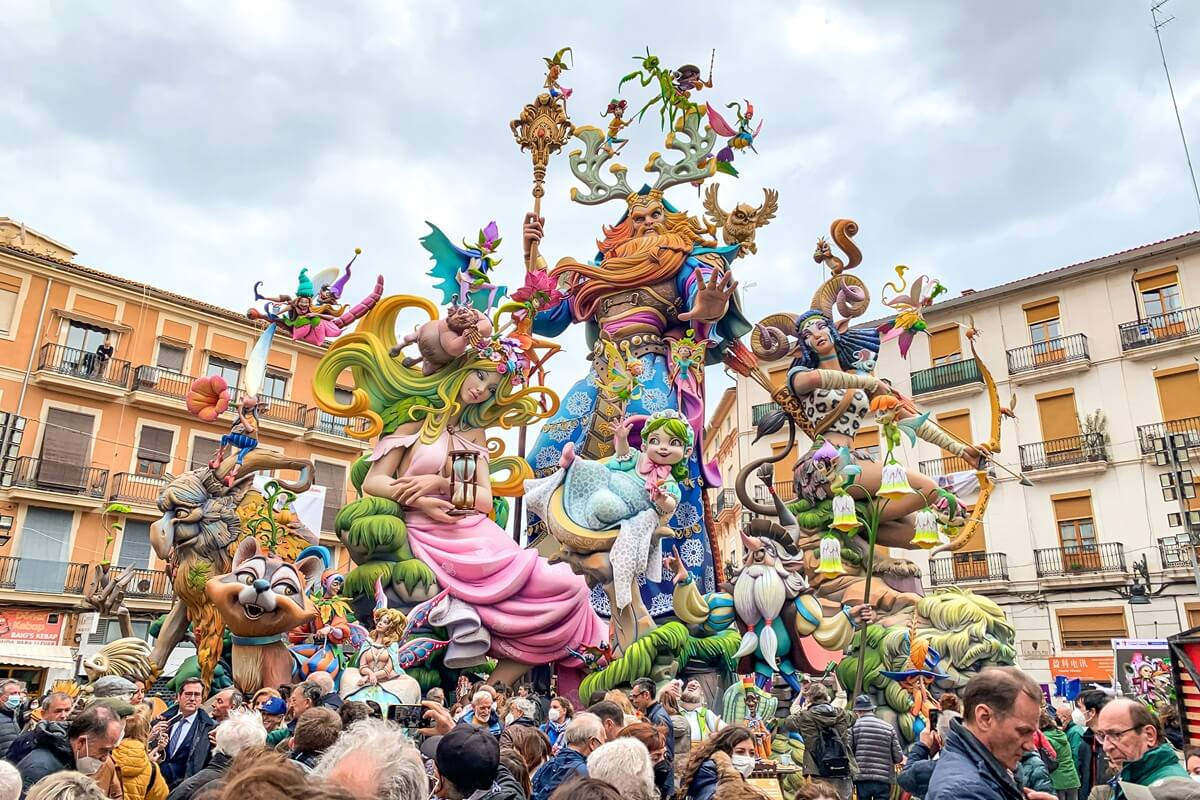
Every March, Valencia transforms into an outdoor art gallery—but instead of paintings and sculptures, the city fills with enormous papier-mâché statues called ninots. These towering figures satirize politicians, pop culture, and scenes from everyday life with humor and sharp social commentary.
Fireworks shake the city throughout the day, especially during the famous daytime mascletà. Then, on the final night, the festival reaches its dramatic conclusion: late at night, the monuments are set ablaze during the Cremà, lighting up the city in spectacular fashion.
It’s loud, chaotic, and completely unforgettable. If you plan to attend, book your accommodation well in advance—and consider packing earplugs.
Semana Santa – Seville (April)
Semana Santa, or Holy Week, in Seville may not be as colorful as some of Spain’s other fiestas, but it is arguably even more powerful. Massive floats known as pasos move slowly through narrow streets, accompanied by incense, solemn music, and centuries-old rituals.
At unexpected moments, someone may sing a heartfelt saeta from a balcony, bringing everything to a standstill as the crowd listens in silence. While deeply rooted in religion, the experience resonates far beyond faith—it’s emotional, atmospheric, and unforgettable.
Feria de Abril – Seville (April)
Just a couple of weeks after Semana Santa, Seville switches moods completely. Feria de Abril is a joyful explosion of color, music, and movement that lasts until dawn.
Locals and visitors dress in flamenco outfits, horses parade through the fairgrounds, and conversations flow as freely as the food and drinks. Some casetas are private, but many welcome the public. If you go, don’t arrive too early—this party truly comes alive after sunset.
San Fermín – Pamplona (July)
This is the festival with the bulls. San Fermín draws visitors from around the world to Pamplona for a week of adrenaline and nonstop celebration.
Each morning, bulls run through the streets during the famous encierro, with daring runners sprinting alongside them. By night, the city turns into one massive street party. And if running isn’t your thing, that’s perfectly fine—many people come purely for the atmosphere, music, and electric energy.
La Tomatina – Buñol (August)
For one hour each year, the small town of Buñol becomes a sea of crushed tomatoes. La Tomatina is messy, ridiculous, and surprisingly well organized.
Wear clothes you don’t mind throwing away afterward. Bring goggles if you want to protect your eyes. That’s really all the preparation you need.
La Mercè – Barcelona (September)
Barcelona’s biggest annual celebration fills the city with a blend of traditional Catalan culture and modern creativity. La Mercè features fireworks, street performances, concerts, and uniquely local traditions like human towers and fire runs.
It’s an excellent choice if you want variety—something festive and energetic without committing to just one style of event.
Carnival – Tenerife (February)
Held in the Canary Islands, the Carnival of Santa Cruz de Tenerife is one of the largest carnivals in the world and is often compared to Rio’s. Expect extravagant costumes, massive parades, and all-night parties.
With warm weather and a lively atmosphere, it’s a perfect escape from winter on mainland Spain.
Planning Tips for Spanish Fiestas in 2026
- Check the dates. Festival schedules can shift slightly each year.
- Book early. Accommodation fills up fast for major events like Las Fallas and San Fermín.
- Respect local traditions, especially during religious festivals.
- Pace yourself. Spanish fiestas reward stamina.
There are countless reasons to celebrate in Spain in 2026. Pick one festival—or follow the party across the calendar. Either way, you won’t just be watching from the sidelines. You’ll be part of the celebration.