

At first, reading in a foreign language can feel slow and frustrating. You may recognize individual words but still not understand the meaning of a sentence. Or you might understand the grammar, but every few lines you run into an unfamiliar word that stops you. This is normal. Reading is often the last skill to improve, but it can also be one of the most rewarding with the right approach.
Here are practical, realistic ways to improve your foreign language reading without burning out.
Start with the Right Level
One of the most common mistakes learners make is choosing material that’s beyond their level. Struggling through every sentence doesn’t build skill—it builds frustration.
Choose texts where you understand about 80–90%. You should encounter some new words, but not so many that you lose the overall meaning. Good options include short stories, graded readers, learner-friendly news, or simple blog posts.
If you finish a page and have no idea what you just read, the level is too high. Step down and try something easier.
Read Often, Not Long
What matters most isn’t length—it’s consistency. Aim for 10–15 minutes a day.
Short sessions help your brain stay focused and make reading feel manageable, which makes it easier to keep going. Over time, those short sessions add up.
Try reading in small pockets of time: over coffee, before bed, during your commute, and so on. The setting isn’t what matters—the habit is.
Don’t Translate Every Word
It’s tempting to look up every unfamiliar word. Don’t.
When you constantly stop to translate, you break the flow of your reading. You also train your brain to rely on your native language instead of the target language.
Instead, read first for meaning. Skip words that aren’t essential. If a word appears often or seems important for understanding the sentence, look it up. Otherwise, keep going.
You’d be surprised how often context fills in the gaps.
Read Aloud Sometimes
Reading aloud connects written words with sound. This is especially helpful in languages where spelling and pronunciation don’t match well.
You don’t need to read everything out loud—just a paragraph or two per session can help. Focus on clarity, not speed. If possible, listen to native audio afterward (if it exists) to check your pronunciation and rhythm.
Reread What You’ve Already Read
Rereading is one of the most powerful tools, and it’s often neglected.
On the first read, aim for the general meaning. On the second read, notice grammar patterns, sentence structure, and vocabulary you missed the first time. By the third read, the text often feels easy—and that’s a good thing.
Rereading also builds confidence. Instead of always chasing something new, you reinforce what you already learned.
Use Language Learning Apps to Support Reading
Language learning apps, when used intentionally, can support reading by reinforcing vocabulary and grammar.
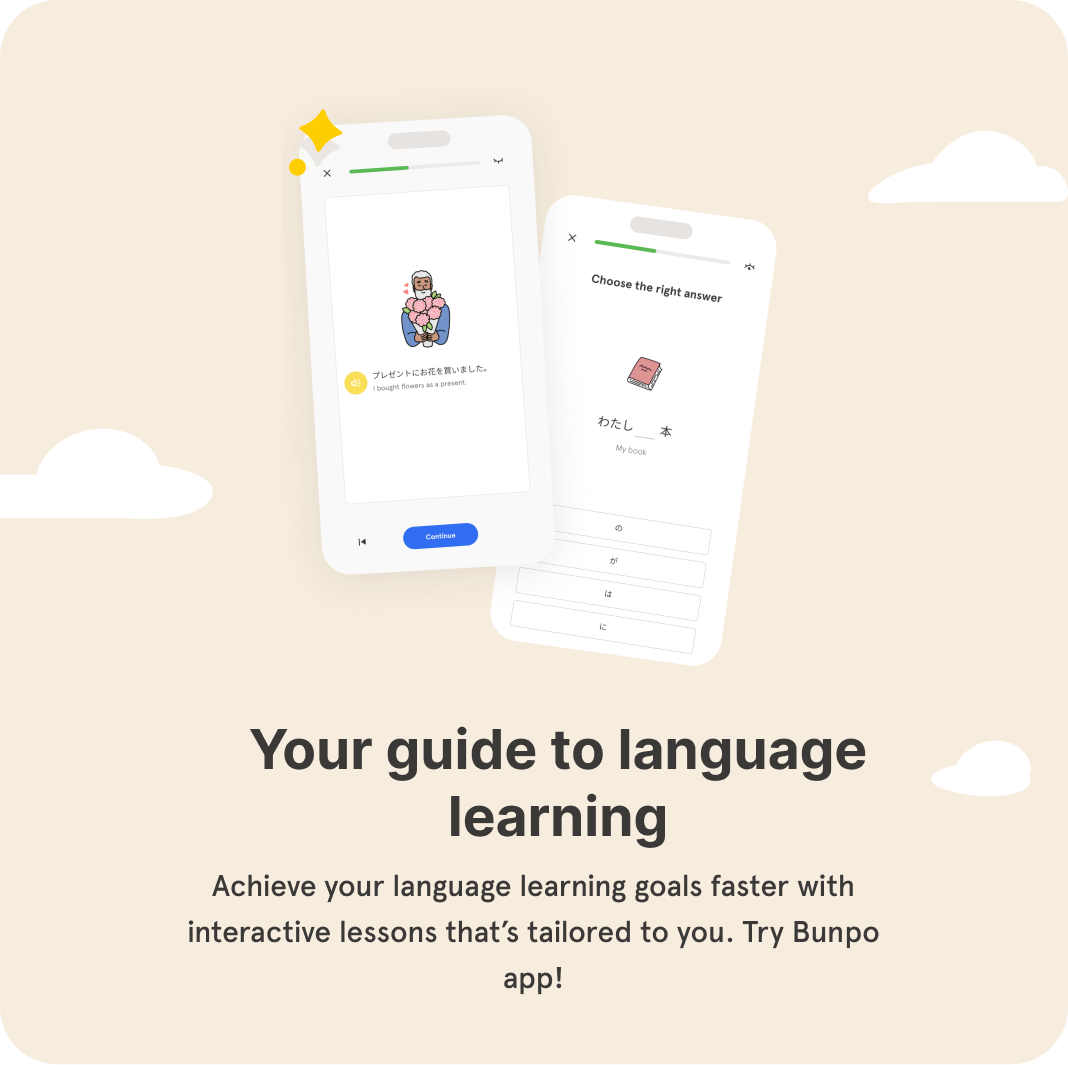
Bunpo is a language learning app that focuses on clear grammar explanations and structured practice. Bunpo breaks grammar points into short lessons with example sentences, which makes it easier to recognize those patterns when you encounter them in real texts. For many learners, grammar gaps—not vocabulary—are the main thing holding back reading comprehension, and targeted practice can make reading feel much smoother.
Used alongside real reading, apps like Bunpo can help you understand why a sentence is structured a certain way instead of just guessing.
The key is balance: apps should support your reading, not replace it.
Build Vocabulary in Context
Word lists are fine, but vocabulary tends to stick better when learned through real sentences.
When you find a useful word while reading, write it down with the sentence it appeared in. This helps you remember how the word actually works, not just its definition.
And when you review, review example sentences—not isolated words. Your reading comprehension will improve faster this way.
Choose Subjects You Care About
What matters most is interest, not difficulty.
If you enjoy the topic, you’re much more likely to keep reading even when it’s tough. Whether it’s food, travel, technology, sports, or personal stories, choose content that genuinely interests you.
Motivation usually fades when the material is boring or doesn’t feel relevant to your life.
Stay Patient and Notice Small Wins
Progress can feel slow, so be patient with yourself. Improving reading takes time, and the changes are often subtle. You might not notice improvement day to day, but then one day you’ll catch yourself thinking:
- “I didn’t stop once while reading that article.”
- “I finally understood that joke.”
- “I didn’t need the dictionary at all.”
Those moments are a sign it’s working.
Stick with it. Read a little every day. Choose material you can mostly understand. Let yourself struggle a bit—but not too much. Reading in a foreign language doesn’t get easy overnight, but it does get natural when you keep showing up.