

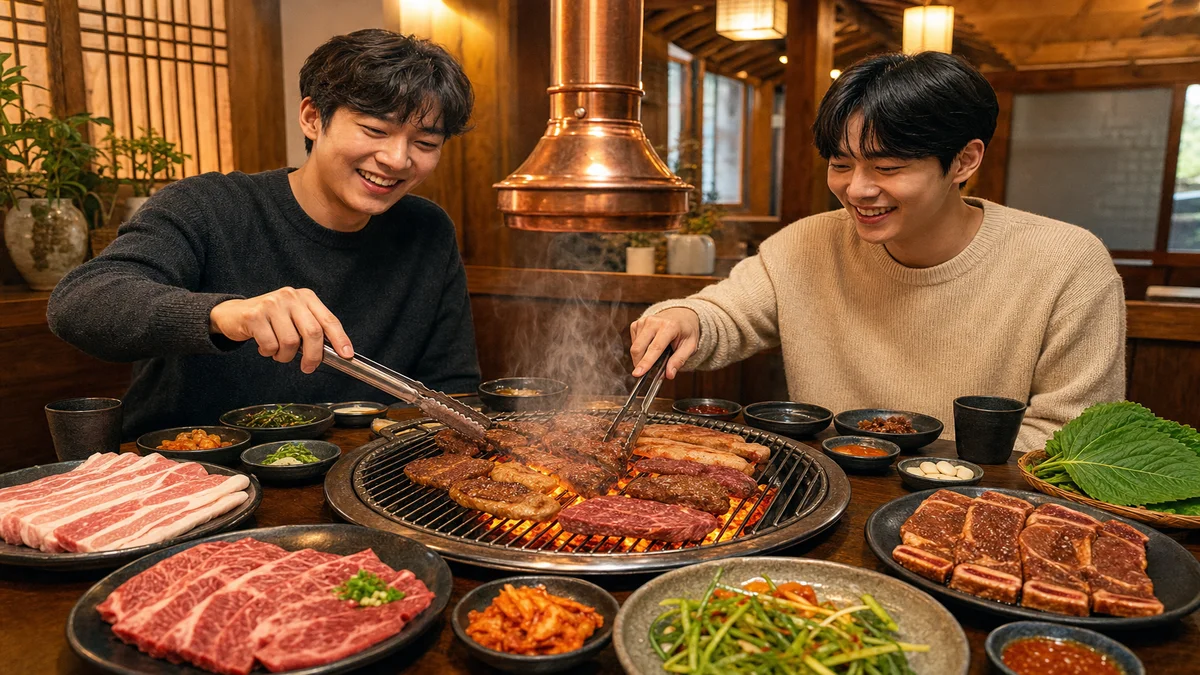
Picture this: you’re sitting at a Korean BBQ restaurant, smoke rising from the grill built right into your table, plates of marinated meat surrounding you, and the only problem is — you have no idea what you just ordered. Sound familiar? Whether you’re planning a trip to Seoul, exploring Korean cuisine at home, or simply want to level up your Korean vocabulary, knowing the words for different types of meat is surprisingly essential.
Korean food culture revolves heavily around meat, seafood, and the communal joy of sharing a meal. Understanding the vocabulary not only helps you order confidently but also gives you a deeper appreciation of the culture behind each dish. Let’s dig in.
How to Say “Meat” in Korean
The basic Korean word for meat is 고기 (gogi).
You can use 고기 on its own when talking about meat in general:
- 고기를 좋아해요. (Gogireul joahaeyo.) — I like meat.
- 고기 먹을까요? (Gogi meogeulkkayo?) — Shall we eat meat?
One useful pattern to remember is that Korean often combines the name of an animal with 고기 to mean “the meat of that animal.”
For example:
- 돼지 (pig) + 고기 (meat) = 돼지고기 (pork)
- 닭 (chicken) + 고기 = 닭고기 (chicken meat)
- 양 (sheep) + 고기 = 양고기 (lamb/mutton)
Once you recognize this pattern, a lot of food vocabulary becomes easier to remember.
Beef, Pork, Chicken, and Other Common Meats
Here are the meat words you’re most likely to see on menus or hear in everyday conversation.
| Korean | Romanization | English |
|---|---|---|
| 고기 | gogi | meat |
| 소고기 / 쇠고기 | sogogi / soegogi | beef |
| 돼지고기 | dwaejigogi | pork |
| 닭고기 | dakgogi | chicken |
| 양고기 | yanggogi | lamb / mutton |
| 오리고기 | origogi | duck |
| 사슴고기 | saseumgogi | venison |
| 칠면조 고기 | chilmyeonjo gogi | turkey |
You may see both 소고기 and 쇠고기 for beef. Both are correct and widely understood.
Beef: 소고기 / 쇠고기
Beef appears in everything from soups and stews to grilled dishes and rice bowls.
Some useful beef-related words include:
- 등심 (deungsim) — sirloin
- 안심 (ansim) — tenderloin
- 양지 (yangji) — brisket
- 차돌박이 (chadolbagi) — thinly sliced fatty brisket
- 갈비 (galbi) — ribs
At a Korean BBQ restaurant, 차돌박이 is especially easy to recognize because it comes in very thin slices and cooks almost immediately on the grill.
Pork: 돼지고기
Pork is one of the most common choices for Korean BBQ.
Important menu words include:
- 삼겹살 (samgyeopsal) — pork belly
- 목살 (moksal) — pork neck / shoulder
- 돼지갈비 (dwaeji galbi) — pork ribs
If you’re visiting a Korean BBQ restaurant for the first time, 삼겹살 is one of the most useful food words you can learn.
Chicken: 닭고기
Chicken is 닭고기, although many dish names simply begin with 닭 (dak).
For example:
- 닭가슴살 (dakgaseumsal) — chicken breast
- 닭다리 (dakdari) — chicken leg
- 닭날개 (daknalgae) — chicken wings
- 닭갈비 (dakgalbi) — spicy stir-fried chicken
- 닭볶음탕 (dakbokkeumtang) — spicy braised chicken
The pronunciation of 닭 can look intimidating at first, but in compounds such as 닭고기, you’ll hear it pronounced close to dak-gogi.
Korean BBQ Vocabulary You’ll Actually Use
Korean BBQ menus contain many words that don’t translate simply as “beef” or “pork.” Learning a few of them makes ordering much easier.
삼겹살 (Samgyeopsal)
삼겹살 is thick-cut pork belly and one of Korea’s best-known BBQ foods.
The name literally refers to the layers of meat and fat. It is usually grilled without a heavy marinade, cut into bite-sized pieces at the table, and eaten with vegetables and dipping sauces.
불고기 (Bulgogi)
불고기 is thinly sliced marinated meat, most commonly beef.
The word can be broken down into:
- 불 (bul) — fire
- 고기 (gogi) — meat
The marinade is usually sweet and savory, making bulgogi a popular choice for people trying Korean food for the first time.
갈비 (Galbi)
갈비 literally means “ribs,” but on a restaurant menu it often refers to grilled or marinated rib meat.
You may also see:
- 소갈비 (sogalbi) — beef ribs
- 돼지갈비 (dwaeji galbi) — pork ribs
- 갈비살 (galbisal) — rib meat
목살 (Moksal)
목살 is a popular pork cut taken from around the neck and shoulder.
It is usually leaner than samgyeopsal but still tender enough for grilling. If you like pork but don’t want a very fatty cut, 목살 is a useful word to remember.
Words for “Grilled,” “Marinated,” and “Spicy”
Knowing the type of meat is helpful, but menu descriptions often tell you how it is prepared.
Here are a few common words:
- 구이 (gui) — grilled food
- 양념 (yangnyeom) — seasoning / marinade
- 매운 (maeun) — spicy
- 소금 (sogeum) — salt
- 숯불 (sutbul) — charcoal fire
- 생 (saeng) — fresh / unmarinated, depending on the menu
For example, 양념갈비 means marinated ribs, while 소금구이 refers to meat grilled simply with salt.
These small words can tell you a lot about what you’re ordering.
Fish and Seafood in Korean
There is one important distinction to know when talking about fish.
물고기 (mulgogi) refers to a fish as an animal, while 생선 (saengseon) usually refers to fish as food.
So at a restaurant or market, 생선 is generally the word you’ll want.
Common seafood vocabulary includes:
- 생선 (saengseon) — fish as food
- 연어 (yeoneo) — salmon
- 참치 (chamchi) — tuna
- 고등어 (godeungeo) — mackerel
- 새우 (saeu) — shrimp
- 게 (ge) — crab
- 조개 (jogae) — clam / shellfish
- 굴 (gul) — oyster
- 전복 (jeonbok) — abalone
- 오징어 (ojingeo) — squid
- 문어 (muneo) — octopus
- 낙지 (nakji) — small octopus
You’ll often see 문어 used for larger octopus dishes, while 낙지 is common in dishes such as 낙지볶음, a spicy stir-fried octopus dish.
Useful Korean Phrases for Ordering Meat
Memorizing a few complete sentences can be more useful than memorizing dozens of individual food words.
이거 무슨 고기예요?
Igeo museun gogiyeyo?
What kind of meat is this?
삼겹살 이 인분 주세요.
Samgyeopsal i inbun juseyo.
Two portions of samgyeopsal, please.
이거 매워요?
Igeo maewoyo?
Is this spicy?
소고기예요, 돼지고기예요?
Sogogiyeyo, dwaejigogiyeyo?
Is this beef or pork?
고기를 안 먹어요.
Gogireul an meogeoyo.
I don’t eat meat.
Notice the word 인분 (inbun) in the second example. Korean BBQ is commonly ordered by portions, so 일 인분 means one serving and 이 인분 means two servings.
What If You Don’t Eat Meat?
If you follow a vegetarian or vegan diet, these expressions are useful:
- 채식주의자 (chaesikjuuija) — vegetarian
- 비건 (bigeon) — vegan
- 저는 채식주의자예요. — I am a vegetarian.
- 고기를 안 먹어요. — I don’t eat meat.
- 해산물도 안 먹어요. — I don’t eat seafood either.
One thing to keep in mind is that a dish that looks vegetarian may still contain meat or seafood broth. If you need to avoid those ingredients completely, it’s best to ask rather than relying on the appearance of the dish.
Bringing It All Together
Korean food culture is rich, layered, and deeply connected to community and tradition. Learning the vocabulary for meat and seafood in Korean isn’t just about being able to point at a menu — it’s about understanding the stories and values behind the dishes. When you know that 쇠고기 (beef) was historically reserved for celebrations, or that 삼겹살 nights are a beloved Korean social ritual, the food suddenly means so much more.
Whether you’re preparing to visit Korea, exploring Korean cuisine in your hometown, or simply expanding your Korean vocabulary one delicious word at a time, you now have a solid foundation to work from. Practice saying these words out loud, try incorporating them into simple sentences, and most importantly — get out there and enjoy some incredible Korean food. 맛있게 드세요 (Masitge deuseyo) — Enjoy your meal!