
Seollal(설날) is one of the most important holidays in South Korea. More than simply the start of a new year based on the lunar calendar, it is a time when families come together to honor ancestors, show respect to elders, and reflect on the year ahead. If you’ve heard of Seollal but aren’t quite sure what it involves, this guide will walk you through the essentials.
What Is Seollal(설날)?
Seollal is the Korean Lunar New Year. It usually falls in late January or February, depending on the lunar calendar. The holiday officially lasts three days: the day before Lunar New Year’s Day, New Year’s Day itself, and the day after.
During this period, many people travel back to their hometowns to spend time with family. Because of this, Seollal is one of the busiest travel seasons in Korea, with highways, trains, and buses often heavily congested.
Why Seollal Is Important in Korea
Seollal holds deep cultural significance, strongly influenced by Confucian values. Respect for elders, family hierarchy, and remembrance of ancestors are central to the holiday. It is a time to pause from daily routines, reconnect with family, and reflect on the past year.
Many people also see Seollal as a symbolic fresh start. It is common to exchange wishes for good health, stability, and good fortune for the year ahead.
Key Traditions of Seollal
Wearing Hanbok
Some families wear hanbok, traditional Korean clothing, especially during formal greetings and ancestral rituals. Children often wear brightly colored hanbok, while adults usually choose more subdued tones.
Ancestral Rites (Charye)
On the morning of Seollal, families perform charye, an ancestral memorial ritual. Food offerings are carefully prepared and arranged to honor deceased ancestors.
Typical offerings include rice cake dishes, fish, meat, fruits, and various traditional Korean foods. The exact foods and arrangements may vary by family.
New Year’s Bow (Sebae)
After charye, younger family members perform sebae, a formal bow to elders. In return, elders give words of advice and blessings for the new year. Children often receive sebaetdon, or New Year’s money, usually given in envelopes.
Eating Tteokguk
Tteokguk, a soup made with sliced rice cakes, is a must-have Seollal dish. Traditionally, eating tteokguk symbolizes becoming one year older and starting the new year fresh.
The “clean start” symbolism is commonly linked to the dish’s white rice cakes (and the overall clear, light appearance of the soup), which represent purity and a fresh beginning.
Traditional Games and Activities
After the formal rituals, families usually spend time relaxing and enjoying activities together. Common Seollal games include:
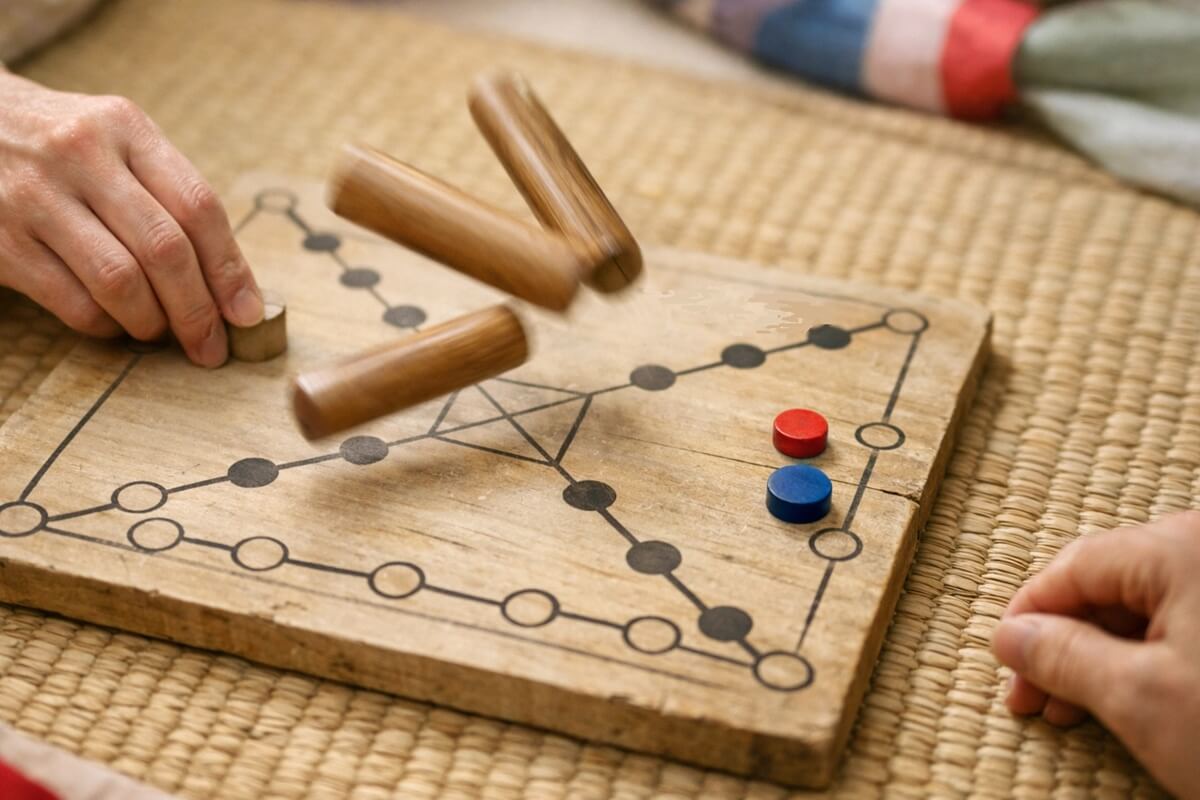
- Yutnori, a traditional board game played with wooden sticks
- Jegichagi, a kicking game similar to hacky sack
- Various card and board games enjoyed across generations
These activities create a warm and cheerful atmosphere during the holiday.
How Seollal Is Celebrated Today
Modern Seollal celebrations vary by family. Some continue to follow traditional customs closely, while others simplify rituals or choose to travel instead of gathering at home.
Ready-made holiday meals, shorter ceremonies, and casual clothing have become more common, especially among younger generations. Despite these changes, the core meaning of Seollal remains the same: spending meaningful time with family and maintaining a connection to cultural traditions.
How Seollal Differs from Other Lunar New Year Celebrations
Although Lunar New Year is celebrated in many countries, Seollal has its own distinct characteristics. It is especially known for the combination of ancestral rites, the practice of formal bows to elders, and the tradition of eating tteokguk on New Year’s Day.
These elements together create a uniquely Korean New Year experience.
In Summary
Seollal is more than just a public holiday in Korea. It is a time for family gatherings, honoring ancestors, sharing traditional food, and reflecting on the year ahead.
If you are in Korea during Seollal, expect quieter city streets, some closed shops, crowded highways, and homes filled with family conversations and traditional meals. It is a meaningful opportunity to experience Korean culture at its most personal.