

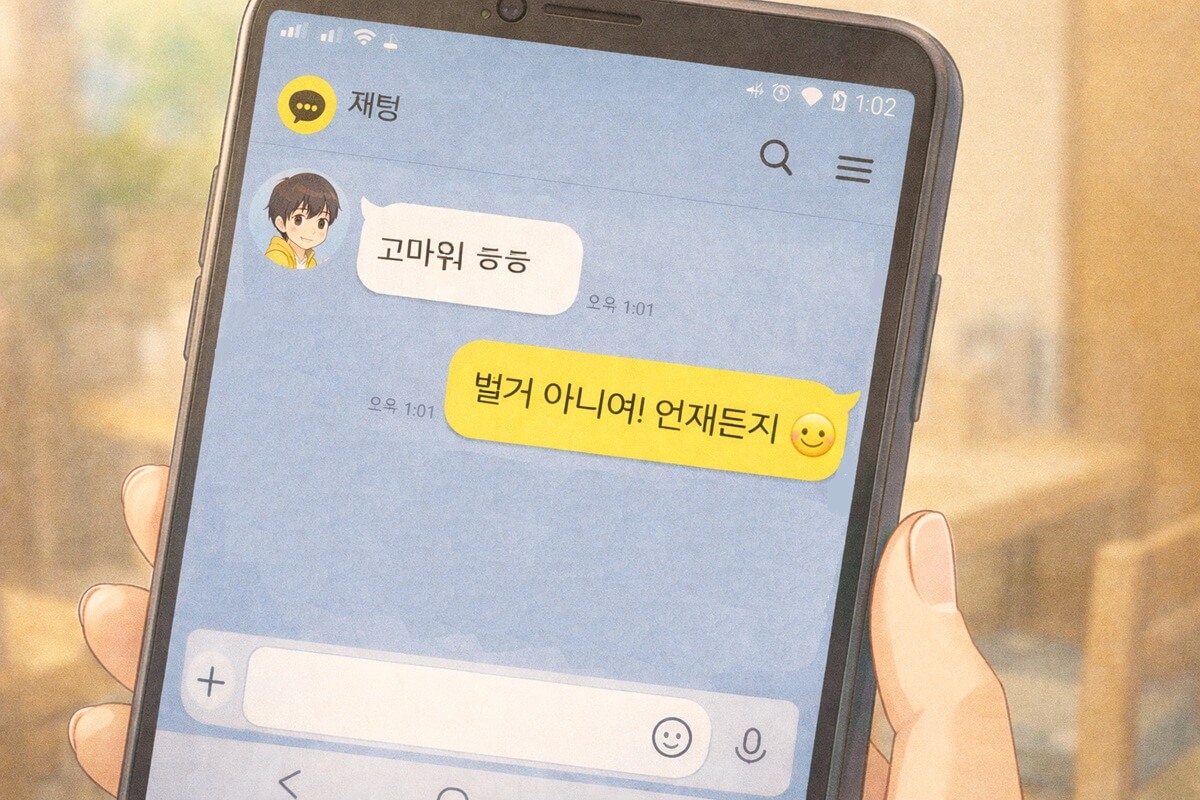
Korean texting has its own signature rhythm: it’s fast, playful, and packed with shortcuts that squeeze a lot of emotion into just a few characters. If you watch K-dramas, follow Korean creators, or chat with Korean friends, you’ve probably seen these acronyms everywhere.
Below are 20 common Korean texting acronyms and shorthand expressions that can make your messages feel more natural and fun—plus what they mean and how to use them.
1) ㅋㅋ
Meaning: LOL / hahaha
Why it’s used: Laughter (the most common “lol” in Korean)
Example:
근데 그거 진짜 웃기다 ㅋㅋ
(That’s seriously funny lol.)
2) ㅎㅎ
Meaning: hehe / soft chuckle
Why it’s used: A warmer, gentler laugh than ㅋㅋ
Example:
고마워 ㅎㅎ
(Thanks hehe.)
3) ㅇㅋ
Meaning: OK
Why it’s used: Quick agreement (Korean shorthand for “오케이”)
Example:
7시에 만나자 ㅇㅋ
(Let’s meet at 7, OK.)
4) ㄱㄱ
Meaning: Go go / let’s do it
Why it’s used: Encouragement, excitement, “let’s go!”
Example:
영화 보러 ㄱㄱ
(Let’s go watch a movie.)
5) ㄴㄴ
Meaning: No no
Why it’s used: Casual refusal
Example:
오늘 술 ㄴㄴ
(No drinking today.)
6) ㅇㅇ
Meaning: Yeah / yes / mm-hmm
Why it’s used: Casual confirmation
Example:
내일 쉬는 날이야?
ㅇㅇ
(Is tomorrow a day off?)
(Yeah.)
7) ㅈㅅ
Meaning: Sorry (죄송)
Why it’s used: Quick apology
Example:
답장 늦어서 ㅈㅅ
(Sorry for the late reply.)
8) ㄹㅇ
Meaning: For real / seriously
Why it’s used: Emphasis or strong agreement
Example:
그 영화 ㄹㅇ 재밌다
(That movie is seriously good.)
9) 인정
Meaning: Agreed / fair point / “I’ll give you that”
Why it’s used: To acknowledge someone’s point (often casually)
Example:
그건 인정
(That’s fair / agreed.)
10) ㅂㅂ
Meaning: Bye bye
Why it’s used: Casual goodbye
Example:
나 이제 가야 돼 ㅂㅂ
(I have to go now, bye.)
11) ㅎㅇ
Meaning: Hi
Why it’s used: Quick greeting
Example:
ㅎㅇ 뭐해?
(Hi, what are you doing?)
12) ㅊㅋ
Meaning: Congrats (축하)
Why it’s used: Celebrating someone quickly in chat
Example:
졸업 ㅊㅋ!
(Congrats on your graduation!)
13) ㅁㄹ
Meaning: I don’t know (몰라)
Why it’s used: “No idea,” “I’m not sure”
Example:
언제 올지 ㅁㄹ
(I don’t know when they’ll come.)
14) ㅅㄱ
Meaning: Nice work / good job (수고)
Why it’s used: Casual praise among close peers, but can sound blunt if used alone
Example:
오늘 발표 수고했어!
(Good job on today’s presentation!)
15) ㄷㄷ
Meaning: OMG / wow / shocked
Why it’s used: Surprise, disbelief, “that’s scary/intense”
Example:
가격이 이게 뭐야 ㄷㄷ
(What is this price… wow.)
16) … (점점점)
Meaning: Awkward silence / no comment / “uh…”
Why it’s used: To show an awkward moment or speechlessness
Example:
…
(No one answered.)
17) ㅠㅠ
Meaning: Crying / sadness
Why it’s used: Sadness, frustration, “I’m about to cry”
Example:
오늘 너무 힘들어 ㅠㅠ
(Today was so hard ㅠㅠ.)
18) ㅜㅜ
Meaning: Crying (similar to ㅠㅠ, slightly softer vibe)
Why it’s used: Gentle sadness, sympathy
Example:
보고 싶어 ㅜㅜ
(I miss you ㅜㅜ.)
19) ㄳ
Meaning: Thanks (감사)
Why it’s used: Quick gratitude
Example:
알려줘서 ㄳ
(Thanks for telling me.)
20) ㅂㅅ (Use with caution)
Meaning: Insult slang (“idiot” / “stupid”)
Why it’s used: Sometimes jokingly between close friends, but can be genuinely offensive
Example:
장난이야 ㅋㅋ ㅂㅅ
(I’m kidding lol…)
Tip: This one can easily come off as rude. If you’re not very close, skip it.
Final Tip: How Korean Texting Acronyms Work
A lot of Korean texting shortcuts are made by typing only the initial consonants of a word or phrase (like ㅈㅅ for 죄송, or ㅊㅋ for 축하). Once you recognize the pattern, you’ll start spotting them everywhere in chats, comments, and DMs.
Try adding just a few to your messages—and you’ll be surprised how much more natural your Korean can feel in everyday texting.