

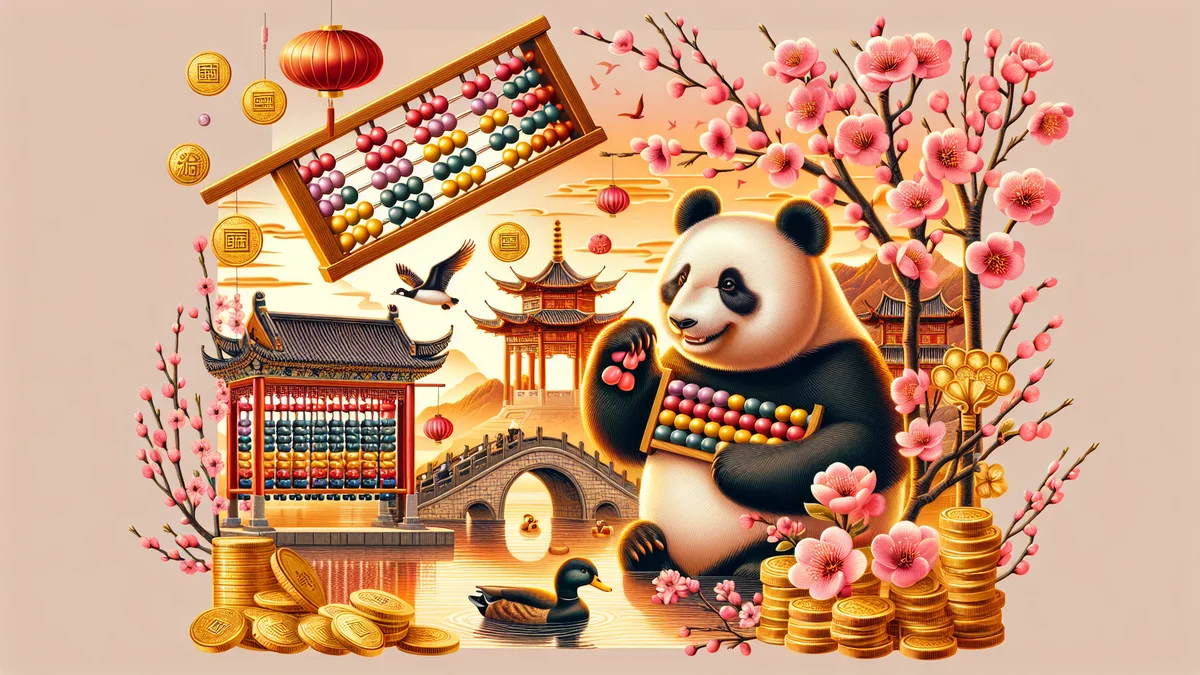
Picture this: you’re watching a Chinese drama, and a character suddenly says something that literally translates to “nine cows, one hair.” You scratch your head, wondering what bovines have to do with the plot. Welcome to the wonderful world of Chinese idioms!
If you’re diving into Mandarin Chinese, you’ve probably noticed that this ancient language is packed with colorful expressions that seem to make no sense at first glance. These aren’t just random phrases – they’re windows into thousands of years of Chinese culture, philosophy, and storytelling.
Today, we’re exploring one of the most fascinating categories: Chinese idioms that feature numbers. From “one” to “ten thousand,” these numerical expressions will give you insight into how Chinese speakers think and communicate.
What Makes Chinese Idioms Special?
Chinese idioms, known as chengyu (成語), are like linguistic treasures that have been polished by centuries of use. Most follow a four-character pattern that packs an entire story or concept into just a few syllables.
What makes these expressions truly unique is their origin. They spring from ancient literature, historical events, philosophical teachings, and folklore. When you learn a chengyu, you’re not just memorizing vocabulary – you’re connecting with stories that have shaped Chinese thought for millennia.
Here’s the interesting part: these idioms often ignore standard Mandarin grammar rules. While typical Chinese sentences follow a subject-verb-object pattern, chengyu march to their own drum, making them both challenging and rewarding to master.
Numbers as Storytellers: Chinese Idioms from One to Ten
Let’s start our numerical journey with some of the most commonly used number-based idioms. Each one tells its own story while teaching us something about Chinese culture and values.
一落千丈 (yī luò qiān zhàng)
Literal meaning: To fall one thousand zhang (an ancient Chinese measurement)
This vivid expression describes a dramatic downfall or steep decline. Imagine someone’s reputation or performance plummeting like a rock dropped from a cliff – that’s the emotional impact this idiom conveys. You might use it to describe a stock market crash or an athlete’s sudden loss of form.
二话不说 (èr huà bù shuō)
Literal meaning: Not saying a second word
When someone acts immediately without hesitation or further discussion, this is your go-to expression. It captures that decisive moment when someone springs into action without delay.
三心二意 (sān xīn èr yì)
Literal meaning: Three hearts, two minds
Ever met someone who can’t make up their mind? This idiom perfectly describes that scattered, indecisive state when someone’s attention is pulled in multiple directions. It’s often used to gently criticize someone’s lack of focus.
四面八方 (sì miàn bā fāng)
Literal meaning: Four faces, eight directions
Think of this as the Chinese version of “from all corners of the earth.” It describes something coming from everywhere at once – whether that’s support, attacks, or just general activity.
五颜六色 (wǔ yán liù sè)
Literal meaning: Five colors, six hues
This delightful expression paints a picture of vibrant diversity. Use it to describe anything brilliantly colorful or wonderfully varied – from a rainbow to a bustling marketplace.
Higher Numbers, Deeper Meanings
As we climb the numerical ladder, these idioms become even more intriguing, often drawing from Buddhist philosophy and ancient wisdom.
六根清净 (liù gēn qīng jìng)
Literal meaning: Six roots are pure
This expression comes directly from Buddhist teachings, referring to the six senses (including the mind) being free from earthly desires. It describes a state of spiritual purity and mental clarity.
七嘴八舌 (qī zuǐ bā shé)
Literal meaning: Seven mouths, eight tongues
Picture a room full of people all talking at once – that’s exactly what this idiom captures. It describes chaotic chatter or animated group discussions where everyone has something to say.
八面玲珑 (bā miàn líng lóng)
Literal meaning: Eight sides, crystal clear
Originally describing bright, spacious architecture, this expression has evolved to praise someone’s social skills. It describes a person who’s diplomatically smooth and skilled at navigating complex relationships.
九牛一毛 (jiǔ niú yī máo)
Literal meaning: Nine oxen, one hair
Here’s where Chinese imagery really shines. Try to spot a single hair among nine massive oxen – impossible, right? This idiom describes something so tiny or insignificant that it’s barely worth noticing.
十全十美 (shí quán shí měi)
Literal meaning: Ten complete, ten beautiful
This is the ultimate compliment in Chinese culture, describing absolute perfection. Whether praising a person’s character or a flawless performance, this idiom expresses complete satisfaction.
Beyond Ten: Large Numbers, Grand Ideas
Chinese culture has always been comfortable with big numbers, and these idioms prove it. They use hundreds, thousands, and ten thousands to express concepts that go beyond mere counting.
百年好合 (bǎi nián hǎo hé)
Literal meaning: Hundred years of good harmony
This beautiful blessing is commonly heard at Chinese weddings. It wishes the couple not just a century of happiness, but eternal harmonious partnership.
千真万确 (qiān zhēn wàn què)
Literal meaning: Thousand true, ten thousand certain
When you’re absolutely, positively sure about something, this is your expression. It’s like saying “I’m 100% certain” but with even more emphasis.
万无一失 (wàn wú yī shī)
Literal meaning: Ten thousand attempts, not one failure
This conveys complete confidence in a plan or system. It’s the Chinese way of saying something is “foolproof” or “guaranteed to work.”
Bonus Gems: More Numerical Wisdom
Here are a few more treasures from the vault of Chinese numerical idioms:
一日千秋 (yī rì qiān qiū) literally means “one day, thousand autumns.” It captures that feeling when you’re desperately waiting for something – time crawls by so slowly that a single day feels like years.
画龙点睛 (huà lóng diǎn jīng) translates to “painting a dragon, dotting the eyes.” This beautiful expression emphasizes how the right finishing touch can transform something good into something extraordinary.
Why These Numbers Matter
Learning these numerical idioms isn’t just about vocabulary expansion – it’s about cultural immersion. Each expression reflects Chinese values, from the importance of harmony and perfection to the appreciation of decisive action and social diplomacy.
When you sprinkle these chengyu into your conversations, native speakers notice. They signal that you understand not just the language, but the cultural wisdom embedded within it.
Start with one or two that resonate with you, practice using them in context, and gradually build your collection. Before you know it, you’ll be speaking with the eloquence and cultural depth that makes Mandarin such a rich, rewarding language to master.
Remember, every chengyu you learn is a small victory in your language journey – definitely not 九牛一毛 (insignificant), but rather a meaningful step toward true fluency!