

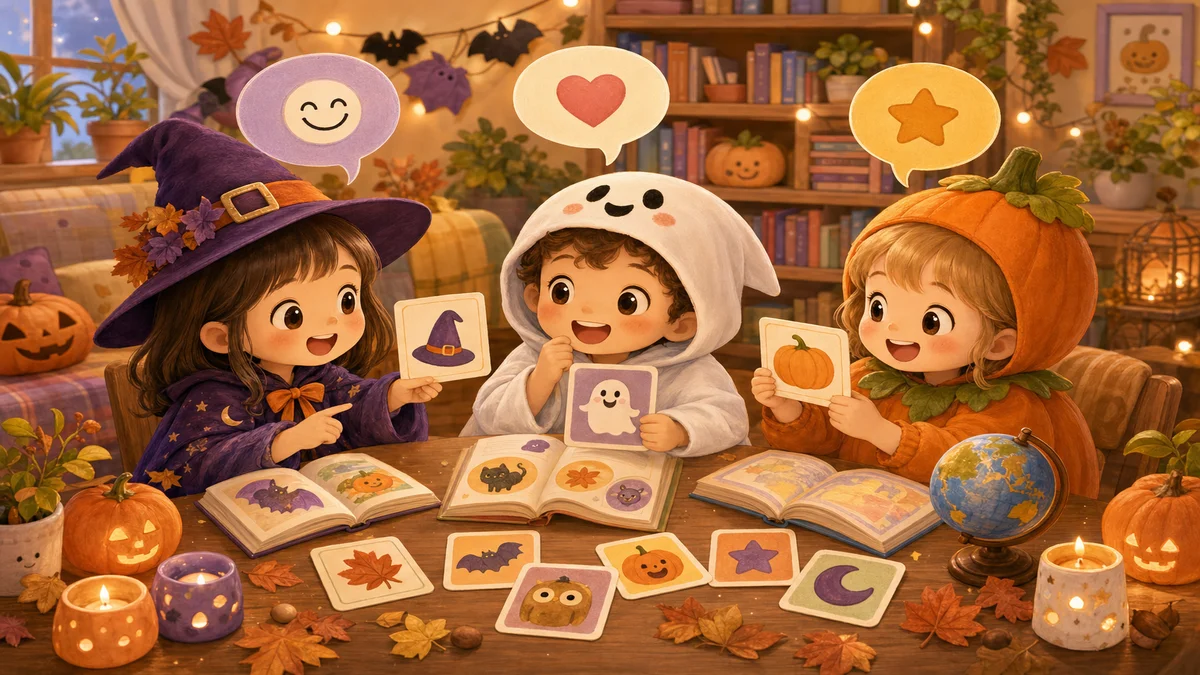
Halloween is almost here again.
Every year, we like to take a trip around the world to see how different places celebrate the spooky season. In a previous Halloween article, we explored festive treats from different countries. This year, we’re looking at something you can hear rather than eat: Halloween words and expressions from around the world.
Some are local versions of “trick or treat,” while others come from traditions that existed long before modern Halloween.
Here are eight words and phrases that reveal a little about how Halloween — and the season surrounding it — looks in different countries.
1. Ireland: Samhain
Samhain is one of the most important words in the story of Halloween.
The ancient Celtic festival marked the end of the harvest season and the beginning of winter. Traditions associated with Samhain in Ireland eventually influenced what developed into modern Halloween.
Today, the word is still closely connected with Ireland’s Halloween heritage, and you will see it used in the names of festivals and seasonal events.
So while “Halloween” might make you think of pumpkins and candy, Samhain takes the story much further back.
2. Scotland: Guising
Before “trick or treat” became familiar in Scotland, there was guising.
The word comes from “disguise.” Traditionally, children dressed up and visited houses in their neighborhood. But there was a catch: rather than simply asking for sweets, guisers were expected to perform something — perhaps a song, joke, poem, or trick — before receiving a treat.
The tradition still survives, although modern trick-or-treating has become more common too.
Think of guising as trick-or-treating with a talent show attached.
3. Germany: Süßes oder Saures!
In Germany, children celebrating Halloween may call out:
Süßes oder Saures!
It is the German version of “Trick or treat!”
Süßes means something sweet, while Saures literally refers to something sour. The expression does not translate word for word into English, but the idea is the same: give us something sweet, or there may be trouble.
Halloween is a relatively modern addition to Germany’s calendar of celebrations, but the phrase has become closely associated with October 31.
4. France: Des bonbons ou un sort!
In France, one Halloween phrase you may hear is:
Des bonbons ou un sort!
It means roughly “Candy or a spell!”
That sounds a little more magical — and perhaps more threatening — than the English version.
Halloween does not have the same long history in France that it has in Ireland or Scotland, but costumes, parties, decorations, and candy collecting have become familiar parts of the celebration.
And if a tiny witch appears at your door demanding des bonbons, handing over the candy is probably the safest option.
5. Italy: Dolcetto o scherzetto!
Italian Halloween comes with a phrase that is particularly fun to say:
Dolcetto o scherzetto!
Dolcetto means a small sweet or treat, while scherzetto means a little trick or prank.
So it is a very close match for “Trick or treat!”
Halloween has grown in popularity in Italy over recent decades, especially among children and younger people. Costumes, spooky decorations, parties, and door-to-door candy collecting can now be found alongside Italy’s older autumn traditions.
6. Spain: ¡Truco o trato!
In Spain, the familiar phrase is:
¡Truco o trato!
This is the Spanish version of “Trick or treat!”
Truco means “trick,” while trato can mean a deal or agreement — essentially, “a trick or a deal?”
Halloween has become increasingly visible in Spain, with costume parties, themed events, and children collecting sweets. At the same time, it sits alongside older observances around All Saints’ Day on November 1.
That combination of imported Halloween fun and local tradition is something you will find in many countries.
7. Mexico: Calaverita
Mexico gives us a word with a very different cultural background:
calaverita
It comes from calavera, meaning “skull.”
Around Día de Muertos, you may hear the expression pedir calaverita, referring to children going out to ask for sweets or small gifts.
It may look similar to trick-or-treating, but Día de Muertos and Halloween are distinct traditions. Día de Muertos centers on remembering and honoring people who have died and has its own customs, imagery, foods, and vocabulary.
The skull itself is one of the season’s most recognizable symbols, appearing everywhere from decorations to colorful sugar skulls.
8. Japan: Kasō
Halloween in Japan developed quite differently from the traditional door-to-door celebration found in North America.
One word that captures the Japanese version particularly well is:
仮装 (kasō) — costume or dressing up
Elaborate costumes have become a major part of Japanese Halloween events. People dress as ghosts and witches, but just as often as anime characters, video-game characters, movie villains, or something completely original.
You will also hear imported expressions such as “Trick or treat!” and “Happy Halloween!”, particularly at events for children.
In Japan, however, Halloween is often less about visiting neighbors for candy and more about costumes, theme-park events, parties, decorations, and seasonal entertainment.
One Halloween, Many Traditions
Halloween may be recognized around the world, but it does not look — or sound — exactly the same everywhere.
In Germany, Italy, France, and Spain, familiar trick-or-treating has produced local expressions. In Scotland, guising preserves an older tradition. Ireland takes us back to Samhain, while Mexico and Japan show how the same season can develop around very different customs.
And that may be one of the most interesting things about Halloween: as it travels, every country adds something of its own.
So whether you hear Süßes oder Saures, Dolcetto o scherzetto, or simply Happy Halloween, there is usually a story hiding behind the words.
Halloween will be here before we know it. Until then, consider this your first little trip around the spooky side of the world.