

Korean is more than a set of grammar rules and vocabulary words. It is a language shaped by centuries of history, culture, writing systems, social change, and contact with other countries. When you study Korean today, you are learning a language that carries traces of ancient kingdoms, royal reforms, Chinese scholarship, modern media, and everyday life.
Understanding the history of the Korean language can make your learning feel more meaningful. It helps explain why Korean uses honorifics, why so many words sound similar to Chinese-based vocabulary, and why Hangul is often praised as one of the most learner-friendly writing systems in the world.
In this beginner-friendly guide, you will explore the origins of Korean, the evolution of Korean over time, the revolutionary creation of Hangul, and how modern Korean developed into the language spoken today.
Where Did the Korean Language Come From?
The origins of Korean go back thousands of years, but its exact linguistic roots are still debated. Korean is often described as a language isolate, meaning it has no clearly proven close relative among the world’s major language families. Some scholars have compared Korean with languages such as Japanese or languages from northern Asia, but there is no universally accepted answer.
What we do know is that Korean developed on the Korean Peninsula over a long period. Early forms of the language were spoken by different communities and kingdoms, including Goguryeo, Baekje, and Silla. These ancient kingdoms helped shape the cultural and linguistic foundation of Korea.
One important turning point came when the kingdom of Silla unified much of the peninsula in the 7th century. This helped one regional variety of Korean gain influence over others. Over time, the language continued to change through political unity, migration, education, and cultural exchange.
Old Korean, the earliest stage of the language that scholars can partly study, was very different from the Korean you hear today. Because there was no native Korean alphabet at the time, people often used Chinese characters to record Korean sounds and meanings. This makes early Korean history difficult to reconstruct, but it also shows how deeply writing and culture were connected.
Chinese civilization had a major influence on Korea for many centuries. Classical Chinese was used in government, scholarship, literature, and official documents. This does not mean Korean came from Chinese. Korean and Chinese are structurally very different languages. However, Chinese characters and Chinese-based vocabulary had a huge impact on Korean language history.
Many Korean words today come from Chinese roots. These are called Sino-Korean words. For example, words related to school, government, science, law, and philosophy often have Chinese-based origins. If you have ever noticed that some Korean words sound more formal or academic, they may belong to this layer of vocabulary.
At the same time, native Korean words remained central to daily life. Words for common actions, basic emotions, family relationships, body parts, and everyday objects often come from older Korean roots. This mix of native Korean and Sino-Korean vocabulary is one reason modern Korean can feel rich, layered, and expressive.
The Creation of Hangul and the Evolution of Korean
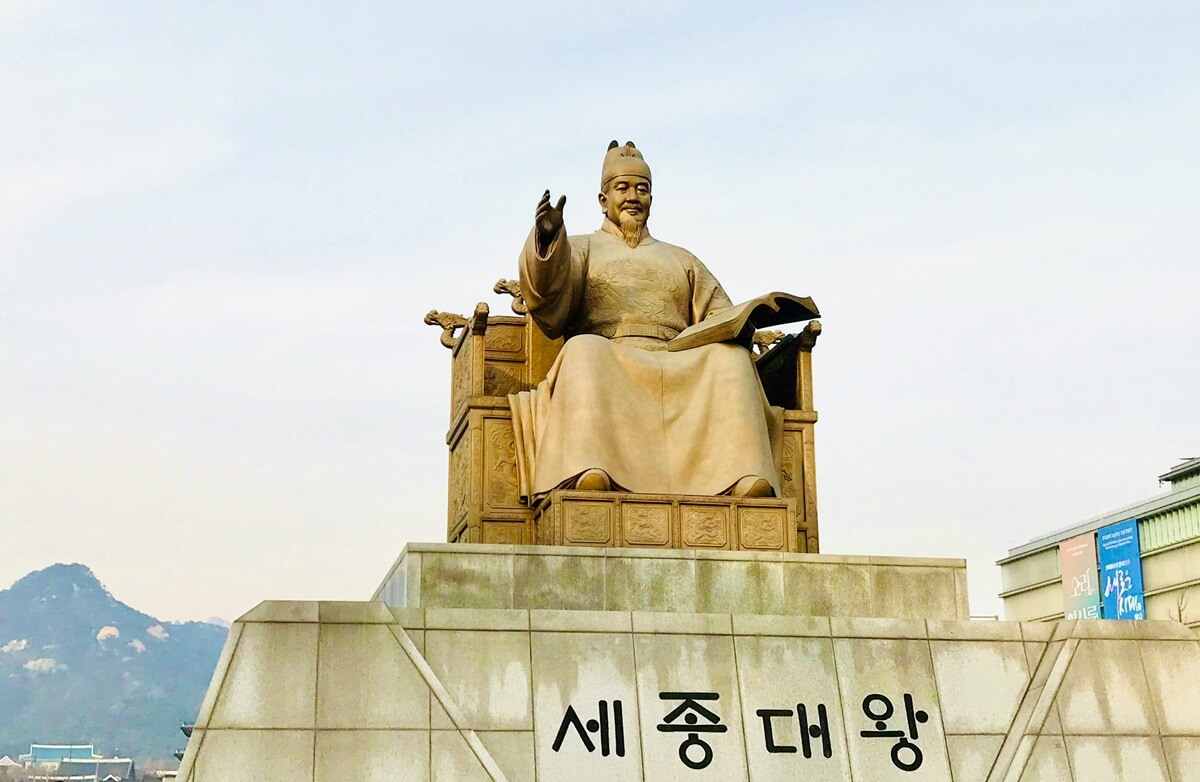
No discussion of Hangul history can begin without King Sejong the Great. In 1443, during the Joseon Dynasty, King Sejong and his scholars created a new writing system for Korean. It was officially introduced in 1446 in a document known as the Hunminjeongeum, meaning “The Proper Sounds for the Instruction of the People.”
Before Hangul, literacy was difficult for many ordinary Koreans. Chinese characters were powerful and respected, but they were not designed for the Korean language. Learning them required years of study, which meant reading and writing were mostly limited to educated elites.
Hangul changed that. It was designed specifically to match Korean sounds. Instead of using complex characters that represented whole words or ideas, Hangul used letters that represented sounds. This made it much easier for ordinary people to learn.
One of the most revolutionary features of Hangul is its scientific design. The basic consonant letters were shaped to reflect the position of the mouth, tongue, or throat when making the sound. For example, some letters visually suggest how the speech organs are used. This makes Hangul not only practical but also closely connected to pronunciation.
Hangul was also organized in a clever way. Letters are grouped into syllable blocks, so Korean writing looks compact and balanced. For learners, this can feel unusual at first, but it quickly becomes logical. A syllable like 한 is made from separate letters, but they are arranged together as one visual unit.
Despite its usefulness, Hangul was not immediately accepted by everyone. For a long time, Classical Chinese and Chinese characters remained the preferred writing system among scholars and officials. Hangul was sometimes associated with common people, women, popular stories, letters, and everyday communication.
Over time, however, Hangul became more widely used. It allowed Korean to be written more naturally and helped preserve the sounds and patterns of the spoken language. This was a major step in the evolution of Korean because it gave the language a writing system that truly fit it.
Korean continued changing through the Joseon period. Pronunciation shifted, grammar developed, and vocabulary expanded. Regional dialects also remained important, with different areas preserving unique sounds and expressions. The Seoul-area dialect eventually became the basis for the standard language used in South Korea today.
The modern period brought even more change. In the late 19th and early 20th centuries, Korea experienced political pressure, modernization, colonization, liberation, division, war, industrial growth, and globalization. Each of these events affected the language in different ways.
During the 20th century, Hangul became a powerful symbol of Korean identity. Efforts were made to standardize spelling, grammar, education, and public language use. Hangul gradually became the dominant writing system in everyday life, while Chinese characters became less common in ordinary writing.
Modern Korean also absorbed words from other languages. Japanese influenced Korean during the colonial period, especially in some administrative, technical, and modern vocabulary. In more recent decades, English has had a strong impact, especially in technology, business, fashion, sports, and pop culture.
You can see this in loanwords such as 컴퓨터 for “computer,” 인터넷 for “internet,” and 카페 for “café.” These words are written in Hangul but come from foreign sounds. Korean often adapts borrowed words to fit Korean pronunciation rules, which is why English-based Korean loanwords may sound different from their original form.
Today, Korean exists in several forms. South Korea and North Korea both use Korean, but their standards have developed differently since the division of the peninsula. There are differences in spelling preferences, vocabulary, pronunciation, and foreign loanword use. There are also Korean-speaking communities around the world, each adding to the broader story of the language.
Why Korean Language History Matters for Learners Today
Learning about Korean language history is not just interesting. It can actually help you become a better learner.
First, it helps you appreciate Hangul. Many beginners are surprised by how quickly they can learn the Korean alphabet. That is not an accident. Hangul was intentionally designed to be clear, logical, and accessible. When you understand its history, you can see why it feels so different from writing systems that developed more gradually or were borrowed from other languages.
Second, Korean language history explains why vocabulary has layers. Some words are native Korean, while others are Sino-Korean or borrowed from English and other languages. For example, Korean often has more than one word for a similar idea, with each word carrying a slightly different tone. A native Korean word may feel everyday and casual, while a Sino-Korean word may sound more formal, academic, or official.
Third, history helps explain the importance of respect and social relationships in Korean. Korean grammar includes honorifics and speech levels, which reflect age, status, closeness, and social context. These features did not appear randomly. They developed within a society where relationships, hierarchy, and politeness were deeply important.
For learners, this means Korean is not only about translating words. It is also about understanding how people relate to each other. When you choose between polite and casual speech, you are using grammar that carries cultural history.
The evolution of Korean also helps explain why modern Korean changes so quickly. New slang, internet expressions, shortened words, and borrowed terms appear all the time. Korean has always changed through contact, creativity, and social shifts. Today’s changes are part of the same long story.
Understanding the history of the Korean language can also make difficult parts of Korean feel less random. Sino-Korean numbers, formal vocabulary, honorific verbs, and spelling rules all become easier to accept when you know they have historical reasons behind them.
Most importantly, language history gives you a deeper connection to what you are learning. Each Korean sentence you read or say belongs to a much larger story. It connects ancient speech, Chinese characters, King Sejong’s alphabet, modern Seoul, regional dialects, global Korean culture, and the everyday conversations happening right now.
Conclusion
The history of the Korean language is a story of continuity and change. Korean grew from ancient roots on the Korean Peninsula, developed through powerful kingdoms, absorbed influence from Chinese writing and vocabulary, and transformed through the creation of Hangul.
Hangul history is especially important because it shows how language can become more accessible. By creating a writing system designed for Korean sounds, King Sejong helped open the door to wider literacy and stronger cultural identity. That decision still shapes how Korean is learned and used today.
Modern Korean continues to evolve through technology, media, global culture, and everyday creativity. For learners, this history is more than background information. It helps you understand why Korean works the way it does and why it feels both ancient and modern at the same time.
When you study Korean, you are not just memorizing words. You are stepping into a language with a rich past, a dynamic present, and a constantly changing future.