

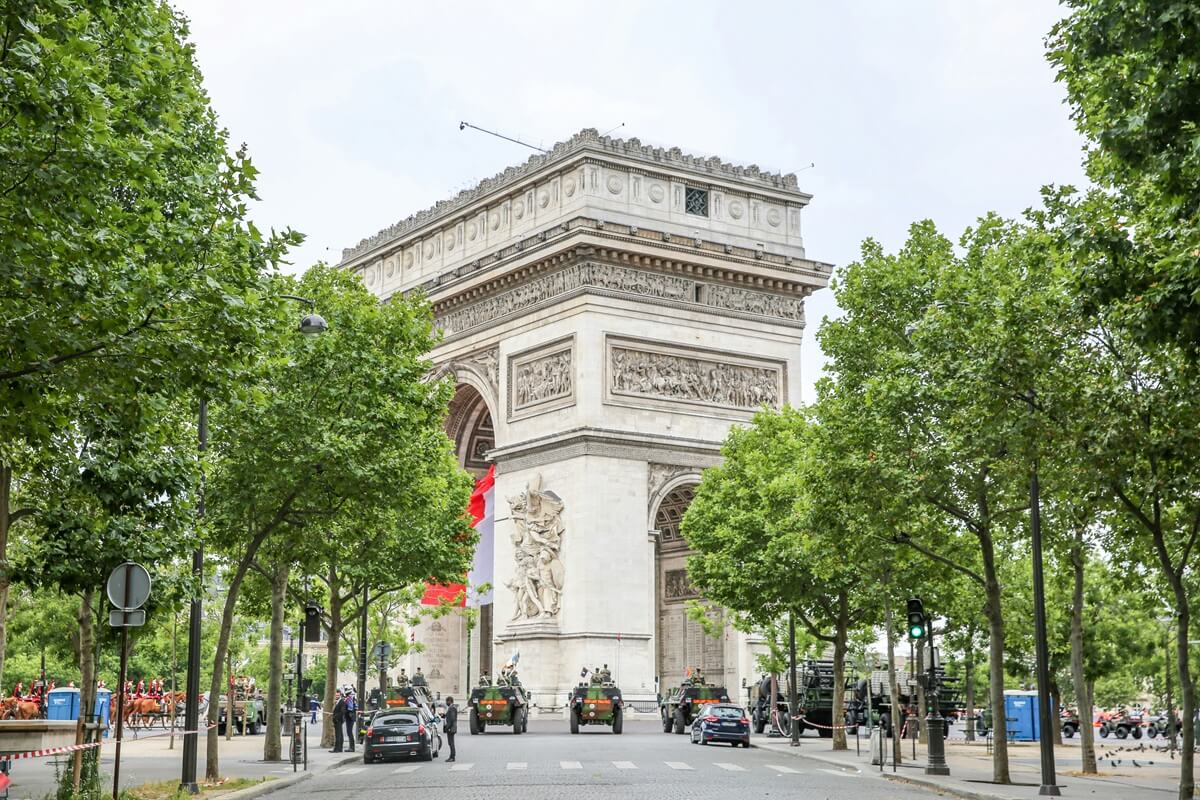
Bastille Day is one of the most important national holidays in France, but it is more than just a day of flags, fireworks, and celebrations. For French learners, it is also a wonderful opportunity to understand French culture, history, and everyday language in a deeper way.
Celebrated every year on July 14 in France, Bastille Day marks a key moment in the country’s history. It is connected to the French Revolution, the idea of citizenship, and the values that still shape modern France today. You may hear people talk about “Bastille Day” in English, but in French, the holiday is usually called la fête nationale or simply le 14 juillet.
In this guide, you will learn what Bastille Day is, why it matters, and how people celebrate it across France. You will also learn essential French vocabulary, useful expressions, and beginner-friendly phrases you can use.
What Is Bastille Day and Why Is It Celebrated?
Bastille Day is France’s national day. It is celebrated on July 14, a date strongly associated with the beginning of the French Revolution and the fall of the Bastille prison in 1789.
In English, the holiday is commonly called Bastille Day, but this name is not the most natural expression in French. French people usually say le 14 juillet, meaning “July 14,” or la fête nationale, meaning “the national holiday.” If you say Bastille Day in English, French speakers will understand the idea, but in a French conversation, le 14 juillet sounds much more natural.
The Bastille was a prison in Paris. At the time, it was seen as a symbol of royal power and injustice. When revolutionaries stormed the Bastille on July 14, 1789, the event became a powerful symbol of resistance against absolute monarchy.
However, Bastille Day is not only about one dramatic historical event. It also represents larger ideas from the French Revolution, such as liberty, citizenship, equality before the law, and the role of the people in shaping the nation. These ideas are still important in French culture today.
One phrase you will often see connected to France is:
Liberté, égalité, fraternité — “Liberty, equality, fraternity”
This is the national motto of France. You may see it on public buildings, official documents, schools, and town halls. For learners, it is a key phrase because it connects language, history, and identity.
- la liberté
- means “freedom” or “liberty.”
- l’égalité
- means “equality.”
- la fraternité
- means “brotherhood” or “solidarity.”
Le 14 juillet est la fête nationale française.
“July 14 is the French national holiday.”
Notice that les Français can mean “French people” or “the French.” When referring to people from a country in French, nationalities are capitalized when used as nouns: un Français, une Française, les Français. But when used as adjectives, they are usually lowercase: la culture française, meaning “French culture.”
Bastille Day also helps you understand how France sees its own history. The holiday is not only about the past. It is also a yearly reminder of national identity, public life, and shared values. That is why July 14 in France includes both official ceremonies and joyful local celebrations.
Bastille Day Traditions Across France
Bastille Day traditions vary from city to city, but the holiday is usually celebrated with a mix of official events, community gatherings, music, dancing, and fireworks. It is both serious and festive, which makes it especially interesting from a cultural point of view.
One of the most famous Bastille Day traditions is the military parade in Paris. In French, a parade is un défilé. The phrase le défilé militaire means “the military parade.” This official event takes place on the Champs-Élysées and is one of the most visible parts of the national celebration.
Il y a un défilé militaire à Paris.
“There is a military parade in Paris.”
The expression il y a means “there is” or “there are.” It is one of the most useful expressions for beginners because you can use it in many situations.
Fireworks are a major part of Bastille Day celebrations. In French, fireworks are called les feux d’artifice. This is a plural expression, so you usually use les or des with it.
The word on is very common in spoken French. It can mean “we,” “people,” or “one,” depending on the context. In everyday conversation, French speakers often use on instead of nous to say “we.”
Another popular tradition is music and dancing. In many towns and cities, there are concerts, outdoor parties, and local dances. One especially famous tradition is le bal des pompiers, which means “the firefighters’ ball.” These festive dances are often organized by fire stations and bring people together for music, dancing, and celebration.
Useful vocabulary
- un bal — a dance or ball
- les pompiers — firefighters
- le bal des pompiers — the firefighters’ ball
- les feux d’artifice — fireworks
- un défilé — a parade
Although nous allons is grammatically correct and useful to learn, in casual speech many French people might say on va. For example, On va au bal des pompiers means “We’re going to the firefighters’ ball.”
Bastille Day is also a time when many people gather with family or friends. They may have a meal together, go into town, watch fireworks, or attend local events. Depending on where you are in France, celebrations may happen on the evening of July 13, during the day on July 14, or both.
A useful cultural point is that Bastille Day is not only a Paris event. While the Paris parade is famous, towns and villages across France often organize their own celebrations. These may include local ceremonies, music, dancing, markets, speeches, and fireworks.
The word la mairie means “the town hall” or “city hall.” In many places, the local town hall plays an important role in organizing public events. Another useful word is une cérémonie, meaning “a ceremony.”
Food can also be part of the celebration, although Bastille Day does not have one single traditional dish that everyone eats. Instead, people may enjoy a picnic, a family meal, street food, or a festive dinner. This reflects an important part of French culture: national holidays are often connected to public life, but they are also moments to enjoy time together.
The word un pique-nique means “a picnic.” The verb faire means “to do” or “to make,” but it appears in many common French expressions. Faire un pique-nique means “to have a picnic.”
You may also hear people say Bonne fête nationale !, which means “Happy National Day!” However, this is not as fixed or universally used as “Happy New Year” or “Merry Christmas.” A more natural way to talk about the holiday is simply to refer to le 14 juillet.
Tu fais quoi pour le 14 juillet ?
“What are you doing for July 14?”
This is a very natural conversational question. Tu fais quoi ? means “What are you doing?” It is informal, so use it with friends, classmates, or people you know well. A more polite version is Vous faites quoi pour le 14 juillet ?
Essential French Vocabulary for Bastille Day
Learning French vocabulary through culture makes words easier to remember. Bastille Day gives you a useful set of words related to holidays, history, celebrations, and national identity.
Holiday and Celebration Words
- le 14 juillet
- July 14. This is the most natural way to refer to Bastille Day in French.
- un jour férié
- A public holiday. Use this for official holidays when many schools, offices, and businesses are closed.
- la fête nationale
- The national holiday. This is the official-sounding term for France’s national day.
- célébrer
- To celebrate. This verb is useful for holidays, birthdays, anniversaries, and important events.
- une tradition
- A tradition. This word is almost the same as in English, but the pronunciation is French.
- les feux d’artifice
- Fireworks. Use this phrase when talking about public firework displays.
- un défilé
- A parade. This word can describe different kinds of parades, including military, fashion, or festive parades.
- le défilé militaire
- The military parade. This phrase is especially useful when talking about the official Bastille Day event in Paris.
Le 14 juillet est un jour férié en France.
“July 14 is a public holiday in France.”
Symbols and History Words
- un drapeau
- A flag. The French flag is called le drapeau français or le drapeau tricolore.
- bleu, blanc, rouge
- Blue, white, red. These are the colors of the French flag.
- la Marseillaise
- The French national anthem. You may hear it during official ceremonies or public events.
- la Révolution française
- The French Revolution. This phrase is important when discussing the history behind Bastille Day.
- la Bastille
- The Bastille. This refers to the famous prison connected to the events of July 14, 1789.
- la prise de la Bastille
- The storming of the Bastille. The word prise comes from the idea of “taking” or “capture.”
Values and Civic Life Words
- la liberté
- Freedom or liberty. A key word in French history and culture.
- l’égalité
- Equality. This word is feminine and begins with a vowel, so la becomes l’.
- la fraternité
- Fraternity or solidarity. This word can sound formal, but it is central to the French national motto.
- une valeur
- A value. This is useful when discussing culture, society, and beliefs.
- la République
- The Republic. France is often referred to as la République française, the French Republic.
- un citoyen / une citoyenne
- A citizen. Use un citoyen for a male citizen and une citoyenne for a female citizen.
Words like citoyen, République, and valeurs connect to a broader cultural idea in France: the relationship between the individual and the state is an important part of public identity.
Beginner-Friendly Expressions for Bastille Day
- Bonne fête nationale ! — “Happy National Day!”
- Tu regardes les feux d’artifice ce soir ? — “Are you watching the fireworks tonight?”
- Vous allez au défilé ? — “Are you going to the parade?”
- Le 14 juillet, il y a beaucoup de monde dans les rues. — “On July 14, there are many people in the streets.”
Bastille Day vocabulary also teaches you how French uses articles. For example, English speakers may want to say “France celebrates Bastille Day,” but in French, countries usually take an article. You say La France célèbre le 14 juillet, not simply France célèbre.
Another useful grammar point is that dates in French use le before the number:
- le 14 juillet — July 14
- le 1er janvier — January 1
- le 25 décembre — December 25
For the first day of the month, French uses 1er, pronounced premier. For other dates, use the regular number. So you say C’est le 14 juillet, meaning “It is July 14.”
Conclusion
Bastille Day is a key part of French culture and a meaningful holiday for anyone learning the language. It celebrates July 14 in France, a date connected to the French Revolution, the storming of the Bastille, and the values of liberté, égalité, fraternité.
For French learners, Bastille Day is more than a historical topic. It gives you practical vocabulary for talking about holidays, celebrations, national identity, and public traditions. Words like la fête nationale, les feux d’artifice, un défilé, un jour férié, and le 14 juillet can help you understand real conversations, cultural references, and French media.
It also shows how language and culture are closely connected. When you learn that French people usually say le 14 juillet instead of “Bastille Day,” you are not just learning a translation. You are learning how French speakers naturally think and talk about their own national holiday.
The next time July 14 comes around, you will be able to recognize the traditions, understand the vocabulary, and talk about the celebration with more confidence. Whether you are watching fireworks, reading about French history, or practicing key phrases, Bastille Day is a great reminder that learning French is also learning a new way to see culture, history, and everyday life.