

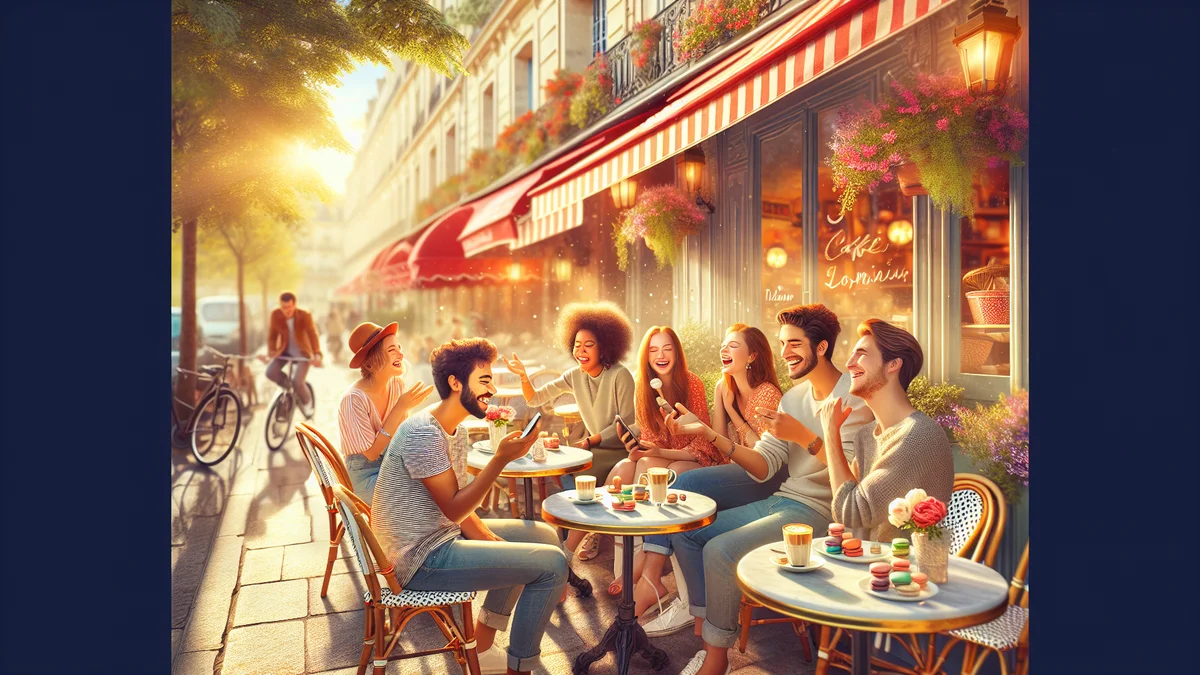
Picture this: you’re confidently ordering coffee in Paris when a French teenager next to you mutters “J’ai trop le seum!” You understand every word individually, but the meaning? Complete mystery. Welcome to the wild world of French slang, where your textbook knowledge meets the reality of how French people actually talk.
Don’t feel lost – this is argot, and it’s rarely covered in traditional language courses. French slang isn’t just random words thrown together; it’s a fascinating linguistic ecosystem that reflects centuries of cultural evolution, immigration, and creative expression.
What Makes French Slang So Special?
French slang has always been about creating an insider’s language. Originally developed in prisons as a way for inmates to communicate without guards understanding them, slang became a tool for creating community and identity among those who felt excluded from mainstream society.
France’s incredible literary heritage – from Victor Hugo to Jean-Paul Sartre – has influenced even its most casual expressions. This means French slang carries an unexpected depth and creativity that you won’t find in many other languages.
Today’s French slang reflects the country’s multicultural reality. Walk through the suburbs of Lyon or the streets of Marseille, and you’ll hear Arabic, Bambara, and Romani words seamlessly woven into French conversations. It’s a living testament to how languages adapt and grow.
The Butchers’ Secret Code: Largonji des Louchébems
One of the most fascinating chapters in French slang history belongs to 19th-century Parisian butchers. They developed their own secret language called largonji des louchébems, and the rules are surprisingly systematic.
Here’s how it works: take the first consonant of a word, move it to the end, add “l” to the beginning, then tack on a suffix. Sound confusing? Let’s break down “louchébem” itself:
- Start with “boucher” (butcher)
- Move the “b” to the end: “ouchéb”
- Add “l” to the front: “louchéb”
- Add the suffix “-em”: “louchébem”
Try this with “bonjour” and you get “lonjourbem” – pretty clever, right? This system has some similarities to English Pig Latin, though each developed independently with their own unique rules.
Why all the secrecy? Butchers didn’t want customers overhearing their behind-the-scenes conversations. In a 19th-century meat shop, there were probably plenty of things better left unheard.
Verlan: The Art of Speaking Backwards
Fast-forward to the late 20th century, and French slang evolved again. Enter verlan – literally meaning “backwards” (à l’envers flipped to verlan). This ingenious word-flipping system became the secret language of French suburbs.
The basic concept involves reversing syllables, though the rules can be more complex than simple reversal. “Louche” (shady) becomes “chelou,” and “fou” (crazy) transforms into “ouf.” French rap artists in the 1990s popularized verlan, turning it from a suburban phenomenon into mainstream culture.
Even legendary French singer Renaud got in on the action with his 1977 hit “Laisse Béton,” where “béton” is verlan for “tombé” (dropped/forgotten). The song title means “drop it” – a perfect example of how slang infiltrates popular culture.
The Grammar of French Slang
While French slang might seem chaotic, it follows surprisingly consistent patterns. One of the most common is la troncation – basically, chopping off parts of words.
You can cut from the beginning (aphérèse):
- “Un problème” becomes “un blème”
- “La musique” becomes “la zic”
Or trim from the end (apocope):
- “Une manifestation” becomes “une manif”
- “Le cinéma” becomes “le ciné”
- “Le baccalauréat” becomes “le bac”
This isn’t random laziness – it’s a systematic way of creating informal, insider versions of formal words.
The Melting Pot: How Immigration Shaped Modern French Slang
Modern French slang tells the story of immigration and cultural mixing. Arabic words have seamlessly integrated into everyday French conversations, especially among younger speakers.
From Arabic, French borrowed gems like:
- Kiffer – to really like something (from Arabic “kif”)
- C’est la hess – it’s a pain/hell (from Arabic “hessd”)
- Le seum – being really angry (from Arabic “samm,” originally meaning poison but evolved to express intense negative feelings)
- Meskin/Meskina – poor guy/girl, used with sympathy
Romani languages contributed words like poucave (snitch) and chourave (steal), while Bambara gave French une go (a girl).
This linguistic borrowing isn’t cultural appropriation – it’s organic evolution. These words emerged from communities where multiple languages naturally mixed and merged.
Digital Age Slang and Text Speak
Just like English, French has adapted to digital communication. Text messaging and social media have created new shortcuts and expressions that mirror spoken slang trends.
You’ll see verlan in text messages, truncated words in Instagram captions, and borrowed words from other languages in TikTok comments. French slang continues evolving at internet speed.
Why Understanding French Slang Matters
Learning French slang isn’t just about sounding cool (though it helps). It’s about understanding cultural context, generational differences, and regional variations. When you grasp slang, you’re not just learning words – you’re accessing the real France.
French slang reveals social attitudes, historical tensions, and cultural pride. It shows how communities adapt language to express their unique experiences and maintain their identity within the broader French-speaking world.
More practically, understanding slang helps you navigate real conversations. French movies, music, and casual conversations are peppered with these expressions. Without them, you’re missing crucial cultural and linguistic nuances.
Ready to Dive Deeper?
French slang opens doors to authentic communication and cultural understanding. Start with common expressions like “c’est ouf” (it’s crazy) or “j’en ai marre” (I’m fed up), then gradually expand your repertoire.
Remember, slang is highly contextual and generational. What sounds natural from a twenty-something might sound forced from someone older. Pay attention to who uses which expressions and in what situations.
Most importantly, don’t be afraid to ask questions. French speakers often enjoy explaining their slang – it’s a point of cultural pride. Your curiosity about these expressions shows genuine interest in French culture beyond textbook formalities.
So next time you hear “J’ai trop le seum,” you’ll know exactly what’s up. And who knows? You might even respond with a perfectly placed “Ah oui, c’est la hess!”