

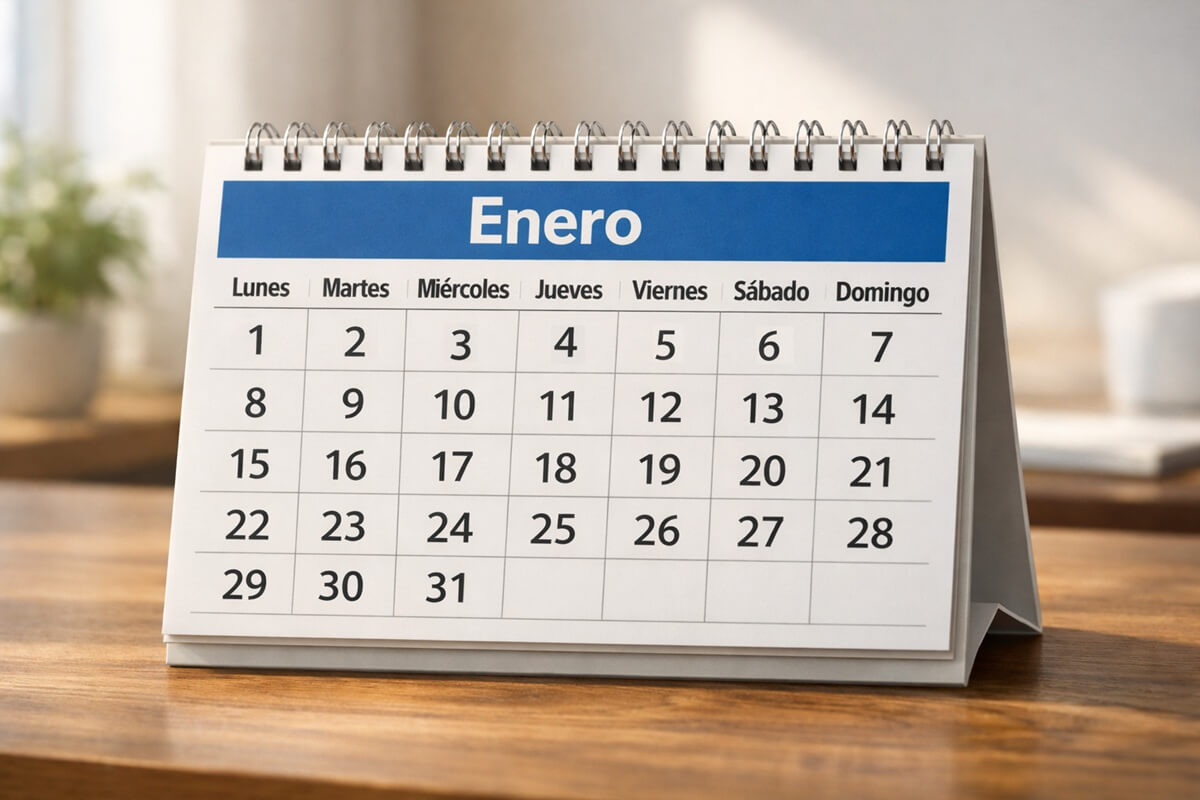
If you’re learning Spanish, one of the first things you should learn is the days of the week. You’ll use them all the time. Whether you’re planning something, talking about work, setting an appointment, or just saying what you did yesterday, these words come up constantly.
The good news? They’re not hard to learn. In fact, once you see the pattern, they’re very easy to remember.
The Days of the Week in Spanish
Here are the seven days of the week in Spanish:
- Lunes
- Monday
- Martes
- Tuesday
- Miércoles
- Wednesday
- Jueves
- Thursday
- Viernes
- Friday
- Sábado
- Saturday
- Domingo
- Sunday
There are only seven words to memorize. They may look different from English, but they follow a clear pattern. Only two of them—miércoles and sábado—have an accent mark.
A Helpful Pattern to Remember
Let’s look at the weekdays:
- Lunes
- Martes
- Miércoles
- Jueves
- Viernes
Do you notice something? They all end in -es.
This isn’t a coincidence. In Spanish, all the weekdays from Monday to Friday end in -es. The only exceptions are:
- Sábado
- Domingo
That simple pattern makes it much easier to remember the order.
Are Days of the Week Capitalized in Spanish?
No.
Unlike English, days of the week are not capitalized in Spanish unless they appear at the beginning of a sentence.
For example:
- Hoy es lunes. (Today is Monday.)
- El viernes tengo una reunión. (On Friday I have a meeting.)
Even though “Monday” and “Friday” are capitalized in English, lunes and viernes stay lowercase in Spanish.
How to Ask “What Day Is It?” in Spanish
Here are two important questions:
- ¿Qué día es hoy? – What day is it today?
- ¿Qué día es mañana? – What day is tomorrow?
To answer, you simply say:
- Hoy es martes. (Today is Tuesday.)
- Mañana es miércoles. (Tomorrow is Wednesday.)
The structure is very simple:
Es + the day
That’s it.
Talking About Regular Activities
If you want to talk about something you do regularly, you need to use the definite article el or los.
For example:
- Trabajo el lunes. – I work on Monday.
- Voy al gimnasio los martes. – I go to the gym on Tuesdays.
Notice the difference:
- el lunes – this Monday
- los lunes – every Monday
Using el usually refers to a specific Monday, while los refers to something you do regularly.
This is an important distinction, so it’s worth remembering.
The Order of the Week in Spanish
One interesting cultural difference is that in Spanish-speaking countries, the week begins on Monday (lunes), not Sunday.
So the order goes:
- Lunes – Monday
- Martes – Tuesday
- Miércoles – Wednesday
- Jueves – Thursday
- Viernes – Friday
- Sábado – Saturday
- Domingo – Sunday
This matches how calendars are commonly organized in Spanish-speaking countries.
Easy Memory Tips
If you want to memorize the days quickly, try these tips:
- Group Monday through Friday together because they all end in -es.
- Remember that sábado and domingo stand out because they don’t end in -es and they’re the weekend.
- Practice saying them out loud in order.
Try repeating:
Lunes, martes, miércoles, jueves, viernes, sábado, domingo.
Say it several times in a row. Repetition helps lock the rhythm into your memory.