

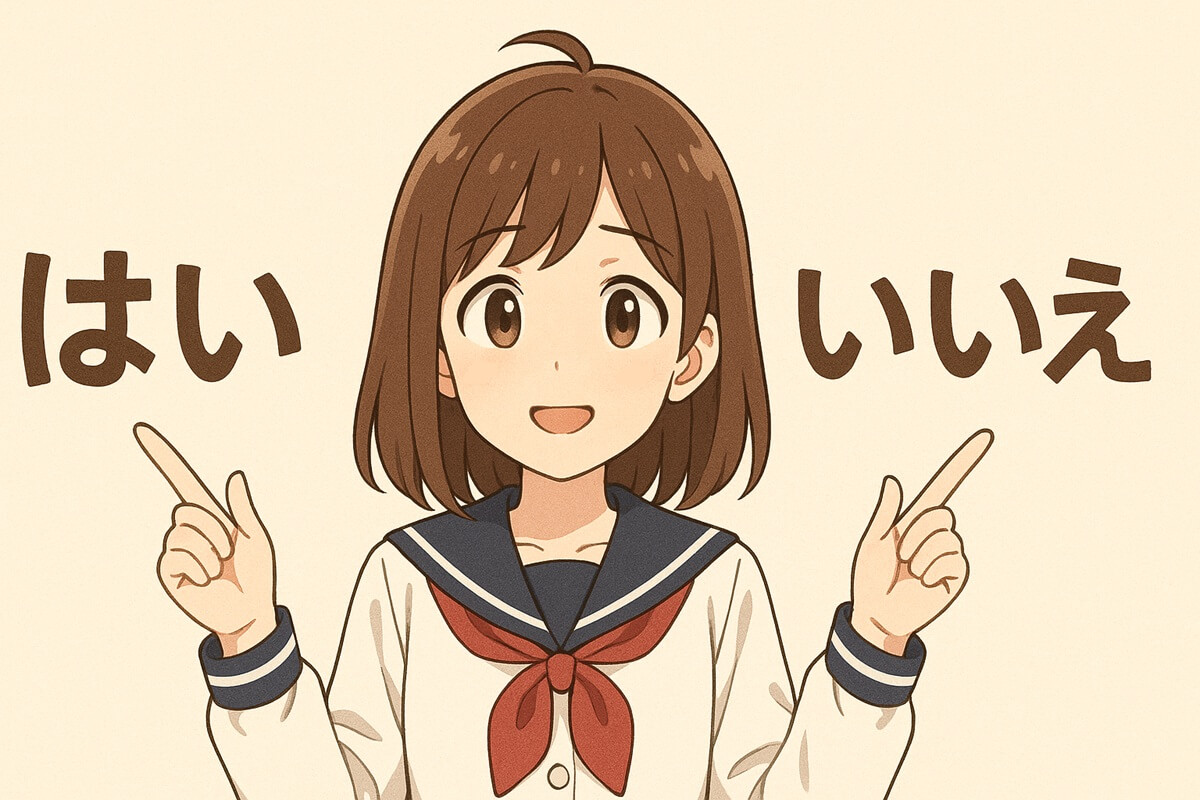
Saying yes or no in Japanese seems easy at first. You learn はい for “yes” and いいえ for “no,” and it feels pretty simple.
Then you run into your first confusing moment: someone asks, “You don’t have a reservation?” and the answer you expect to be “no” turns into 「はい」 in Japanese.
What is going on?
The key is that Japanese yes and no follow the logic of the question, not the logic of your intention. Once you understand that, everything starts to make sense.
Here is a clear guide that keeps things simple and practical.
The Key Rule
- はい affirms the question.
- いいえ negates the question.
Think of it as agreeing or disagreeing with the statement inside the question.
If someone asks:
行きますか。
Are you going? / Will you go?
- はい = I’m going / I will go.
- いいえ = I’m not going / I will not go.
If they ask:
行きませんか。
Aren’t you going? / Won’t you go?
- はい = I’m not going / I will not go.
- いいえ = I’m going / I will go.
This is the rule that trips up English speakers, because we usually answer based on our intended meaning, not the sentence structure.
Why This Matters
Negative verbs show up in many Japanese questions, especially in casual speech. They soften the tone, much like “won’t you?” or “don’t you?” in English.
For example:
- 食べませんか
- 来ないの
- わからないの
These feel natural in Japanese, but they can confuse learners when it’s time to answer with はい or いいえ.
Practical Examples
1. Positive Question
明日来ますか。
Are you coming tomorrow? / Will you come tomorrow?
- はい、来ます。 — Yes, I will come.
- いいえ、来ません。 — No, I will not come.
Nice and easy.
2. Negative Question
明日来ませんか。
Won’t you come tomorrow? / Aren’t you coming tomorrow?
- はい、来ません。 — Yes, I won’t come. (You are agreeing with “not coming.”)
- いいえ、来ます。 — No, I will come.
If you answer according to your intention and not according to the structure, you can completely reverse the meaning, so be careful.
3. Casual Negative Question
In casual conversation, people often avoid はい/いいえ and use うん (yeah) and ううん (nope).
行かないの?
You’re not going?
- うん、行かない。 — Yeah, I’m not going.
- ううん、行く。 — No, I’m going.
「うん」 and 「ううん」 work like casual はい and いいえ, and the same logic applies: you’re agreeing or disagreeing with the statement in the question.
When Japanese Avoids Yes/No Altogether
Even native speakers often avoid a plain yes or no and instead answer with a full sentence. This avoids confusion and usually sounds more natural.
Instead of just:
- はい
You might hear:
- 行きます。
- 持っています。
- 大丈夫です。
Instead of just:
- いいえ
You might hear:
- 行きません。
- 持っていません。
- まだです。
This is especially helpful with negative questions.
Example: Reservation
まだ予約していませんか。
You haven’t made a reservation yet?
Strictly following the rule:
- はい、していません。 — Yes, I haven’t made one. (Affirming “not having a reservation”)
But in real conversation, it’s often clearer to just repeat the verb:
- していません。 — I haven’t (made one).
- しています。 — I have (made one).
This way, there is no confusion about what you mean.
A Simple Trick to Stay Accurate Every Time
Simple trick to stay accurate every time:
Ask yourself, “Is the statement inside the question true?”
- If it is true, answer はい.
- If it is false, answer いいえ.
Example
雨が降っていないの?
It’s not raining?
If it really is not raining, the statement “it’s not raining” is true.
Answer: はい。
If it actually is raining, the statement is false.
Answer: いいえ。
Again, if you want to be extra clear, you can answer:
- はい、降っていません。 — Yes, it’s not raining.
- いいえ、降っています。 — No, it is raining.
Overview
- はい really means “That is correct.”
- いいえ really means “That is not correct.”
- Negative questions flip the expected answer for many English speakers.
- Full sentence answers with the verb (
行きます / 行きません, etc.) are often clearer and more natural.
Once you get used to affirming or denying the statement rather than your intention, Japanese yes/no questions stop feeling tricky. You’ll also notice that native speakers tend to answer with full sentences that include the verb—which is a great habit to copy.